
mordant


 1
9.9
1
9.9
- noun
- /ˈmɔrdənt/
- Specialized
- The wool was dyed by the ancient traditional method, boiling the dried insects and using alum as a mordant.
Loading YouTube…
Watch on YouTubeIt's a direct dye, which means that it sticks directly on the fibers without the need of a mordant.
- It's a direct dye, which means that it sticks directly on the fibers without the need of a mordant.
Examples
-
"Death is our mordant," it said.
Fiction book (2002) -
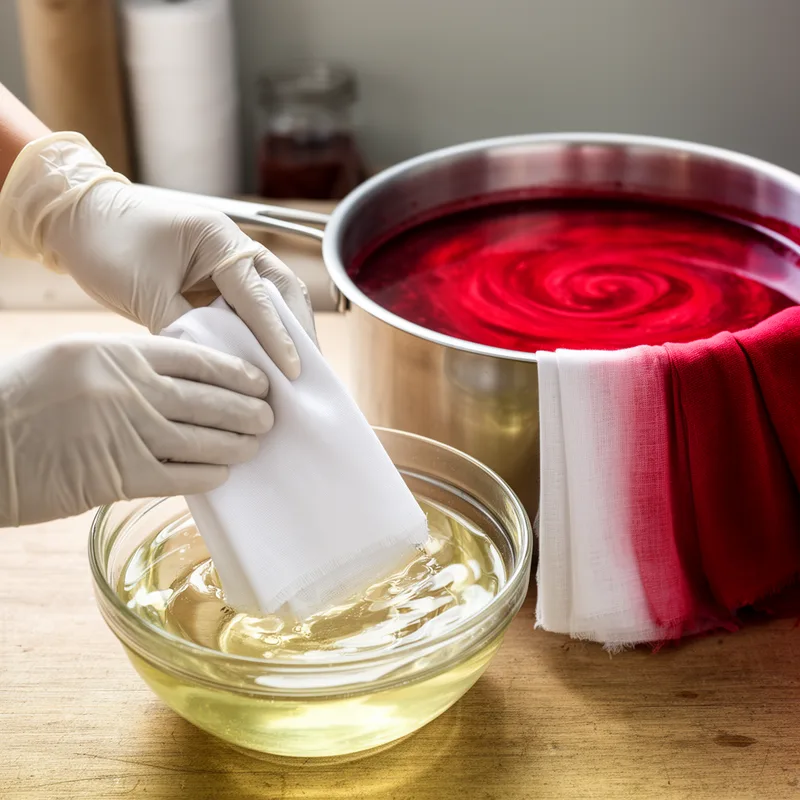
Before dyeing, the artist treated the fabric with a mordant to enhance the colors.
-
The tengu drops into the scene, squealing mordant.
Fiction book (1995) -
These processes include drying the coccoids, boiling them in water, and using alum as a mordant.
Academic text (2005) -
She can keep her poisonous mordants and stale urine.
Fiction book (1994) -
Loudon Wainwright III's mordant
Academic text (2004) -
It requires the storage of poisonous mordants as well as stale urine and other unpleasant things.
Fiction book (1994) -
Using a mordant like alum helps ensure that the dye adheres well to the fibers.
-
The old technique for dyeing leather involves applying a mordant to fix the color.
How Permanent

Surface Forms
Morphology
mordant = mord + ant
The dyeing-noun sense derives from the same historical formation (something that 'bites' or fixes dye), but because the root is not a modern English word, the relation is not transparently recoverable by learners.
Etymology
Mordant comes from the Latin mordere 'to bite', and in dyeing a mordant is a substance that 'bites' into cloth or leather to help the color stick, which is why the same word is used for these dye-fixing chemicals.