
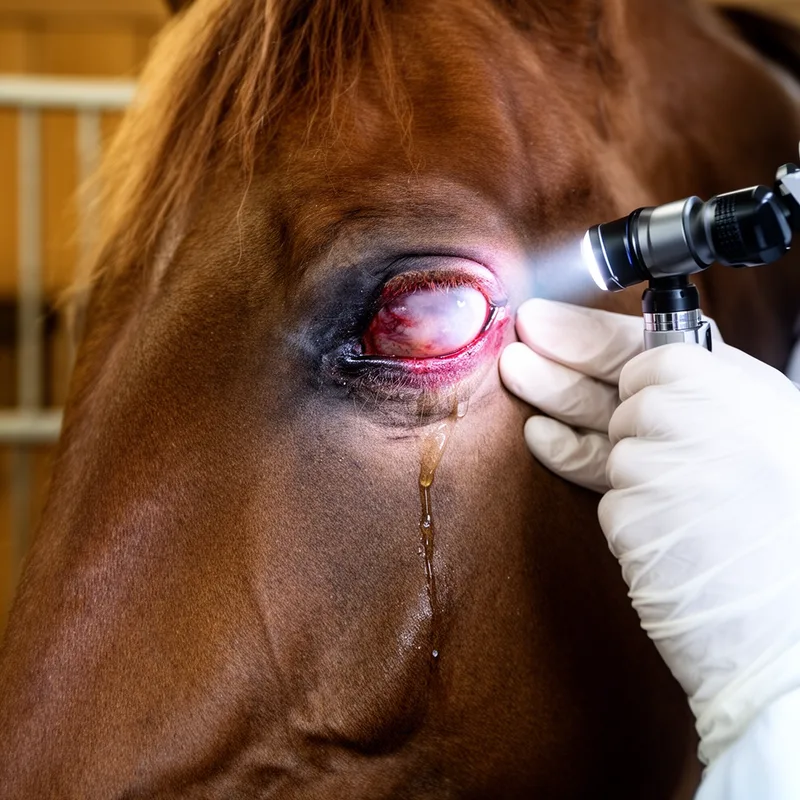
moon blindness
- noun
- Specialized
- Owners should be vigilant for signs of moon blindness, such as cloudiness or squinting in their horse's eyes.
Examples
-
The veterinarian diagnosed the horse with moon blindness after repeated episodes of eye inflammation.
-
Untreated moon blindness can eventually cause permanent vision loss in horses.
-
The horse suffers from moon blindness.
-
Many horses develop moon blindness due to recurrent inflammation.
-
Owners should be vigilant for signs of moon blindness, such as cloudiness or squinting in their horse's eyes.
-
The veterinarian diagnosed the horse with moon blindness after repeated episodes of eye inflammation.
-
Untreated moon blindness can eventually cause permanent vision loss in horses.
Synonyms

 3
7.9
3
7.9

Swelling of the back part of the eye that often causes vision problems
A repeated swelling and redness of the eye in horses that can cause blindness

Swelling at the back of the eye that can cause vision problems

Swelling and pain in the colored part of the eye and nearby tissue that makes vision worse

Inflammation of both the iris and the cornea that causes eye pain and blurred vision

A condition that causes severe redness, swelling, and pain in the eye
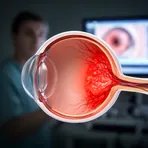
Swelling of the layer of blood vessels at the back of the eye
Surface Forms
Morphology
The meaning is directly derivable from the constituents: 'moon' evokes night/dim light and 'blindness' denotes loss of sight, so a learner who knows both words can infer 'loss of vision in low light' or 'night blindness'. This compositional relation is straightforward and parallels the common term 'night blindness', making the MWE immediately comprehensible to B1 learners.
Etymology
Moon blindness may come from farmers who saw horses get eye problems that kept coming back after nights with a bright 'full moon', so they linked the trouble to the moon. That's why the term now means a repeated eye inflammation that can lead to 'blindness' in horses.