
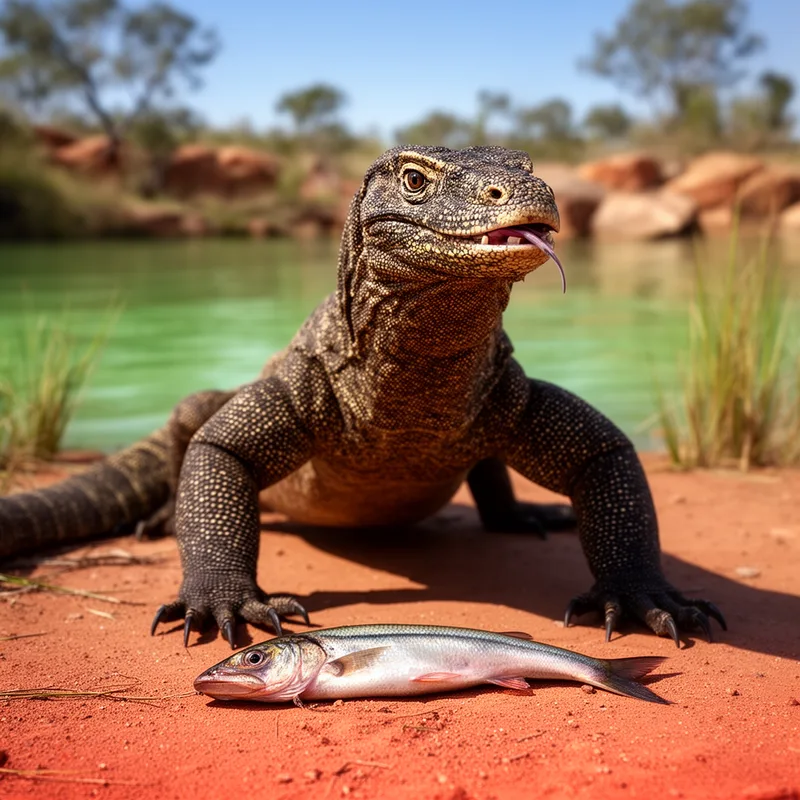
monitor lizard
 1
6.1
1
6.1

- noun
- /ˈmɒnɪtər ˈlɪzərd/
- Sadly, outside protected areas, most species of monitor lizards in Africa are in decline today.
- monitor lizards in Africa
- small monitor lizard
- long monitor lizard
Examples
-
Monitor lizards are adaptable, able to survive fairly well on farms and other lands altered by humans.
Academic text (1995) -
Any large monitor lizard is dangerous.
Blog text (25) -
The monitor lizards in Bangkok are not aggressive to humans.
Blog text (25) -
Monitor lizards can reproduce without a mate.
-
Monitor lizards, such as the leguaan, are exceptional walkers when compared with similar-sized iguanid lizards.
Academic text (1995) -
While hiking in the tropics, we spotted a stunning monitor lizard basking in the sun on a rock.
-
Local villagers believe that a monitor lizard sighting can warn them of nearby crocodiles in the river.
-
The monitor lizard is known for its strong build and can reach impressive lengths in the wild.
Synonyms
 2
9.1
2
9.1
A large tropical lizard that eats meat and has a long tail


 1
9.9
1
9.9
A group of large lizards called monitor lizards, like the Komodo dragon
A large lizard that lives in hot places and hunts birds and mice
How Big

Surface Forms
Morphology
The noun–noun combination denotes a subtype: knowing 'monitor' (here specified as a large Varanidae) together with 'lizard' yields the meaning 'a particular kind of lizard.' This is a straightforward compositional pattern (type-of relationship) common cross-linguistically, so a B1 learner who knows both constituents will readily understand it.
Etymology
Monitor lizard may come from the old belief that these big lizards gave warning signs when crocodiles were near. Because they seemed to monitor or 'watch' for danger, people began to call them monitor lizards.