

to modulate
 1
7.4
1
7.4

- verb
- /ˈmɒdʒʊleɪt/
- Specialized
- The excerpt began in the key of D major and modulated to the key of A major.
Examples
-
Now I'm going to modulate, go to a different key.
-
The music modulated once, then twice.
Fiction book (2002) -
I can't improvise, modulate, or move up a scale or whatever these musical types do.
Blog text (14) -
He played two choruses and, getting a little bored with his own rendition, modulated into "Me and My Shadow."
Fiction book (1997) -
As the church doors opened, she modulated into a rhapsody, half Chopin and half her own dreamy benediction.
Fiction book (1991) -
The excerpt began in the key of D major and modulated to the key of A major.
-
Now I'm going to modulate, go to a different key.
-
The violins get louder, finally modulate into the major key, and are joined by cellos, violas, and a harp.
Synonyms
 1
7.2
1
7.2
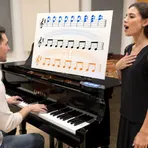
Change the key of a song to make it higher or lower

To change a song's key to make it higher or lower
Surface Forms
Morphology
modulate = modul + ate
Same morphological build as sense 1 ('modul-' + '-ate'); the root is a combining form rather than a familiar standalone word, so the sense 'change key' is related but not transparently predictable for all learners.
Etymology
The word modulate comes from the Latin root modus, meaning 'measure', and shares the same root as mode and moderate. In music this gives a simple picture: you move the melody into a different 'mode' or place, so to modulate is to change key.