

mint family


 1
3.3
1
3.3
- noun
- /mɪnt ˈfæmɪli/
- Specialized
- Azove hyssop is a blue-flowered plant of the mint family, whose twigs were used for sprinkling in biblical purification rituals.
- member of the mint family
- mint family herbs
- plant of the mint family
Loading YouTube…
Watch on YouTubeAnother stunning mint family plant is Agustashi or Hummingbird mint.
- Another stunning mint family plant is Agustashi or Hummingbird mint.
Examples
-
Another stunning mint family plant is Agustashi or Hummingbird mint.
-
Bees constantly visit the plant, which belongs to the mint family.
Academic text (2010) -
Lamium album, a mint family member known in England as white dead-nettle, routinely flowers throughout the winter in England.
Academic text (2004) -
This Asian genus of the Labiatae (mint family) contains 16 shrub and herb species of widely varying floral and pollen morphologies.
Academic text (1998) -
Rosemary is one of the most flavorful and aromatic herbs of the mint family.
-
Catnip is a perennial herb that belongs to the mint family.
-
Bees constantly visit the plant, which is a member of the mint family.
Synonyms

A family of plants with strong smells, like mint and rosemary

A group of plants with a strong smell, like mint and rosemary
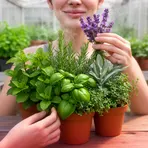
A large plant family of herbs with a strong smell, like mint and rosemary
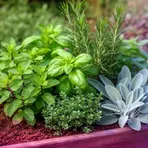
A family of aromatic herbs and shrubs like mint and sage
Surface Forms
Morphology
The meaning 'a group of related aromatic herbs including mint' is directly and compositionally derived from 'mint' (the plant) plus 'family' (a grouping of related species). This taxonomic/collective construction is common across languages and follows standard English noun + noun composition, so a B1 learner who knows both words can infer the MWE's meaning.
Etymology
Mint family is the name for a group of plants that all smell like mint and often have square stems and flowers that look like lips. So the phrase pictures a family of related herbs that share a strong smell, which is why it means 'a group of related herbs'.