
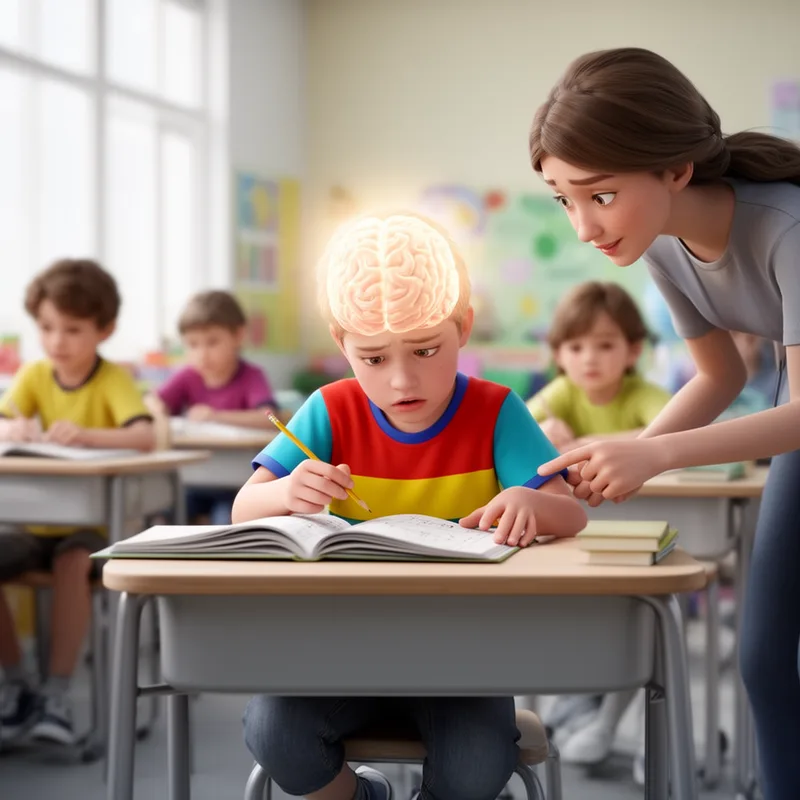
minimal brain damage
- noun
- /ˈmɪnɪməl breɪn ˈdæmɪdʒ/
- Archaic
- The diagnosis of minimal brain damage is now considered outdated and has been largely replaced by newer terms.
Examples
-
Some experts believe that minimal brain damage may explain certain learning difficulties in children.
-
In the 1970s, the term minimal brain damage was commonly used to describe hyperactive behavior.
-
He has minimal brain damage.
-
The doctor diagnosed him with minimal brain damage.
-
Some experts believe that minimal brain damage may explain certain learning difficulties in children.
-
In the 1970s, the term minimal brain damage was commonly used to describe hyperactive behavior.
-
The diagnosis of minimal brain damage is now considered outdated and has been largely replaced by newer terms.
Synonyms

 45
4.0
45
4.0

A condition that makes it hard to pay attention, stay still and control impulses in daily life
 44
4.0
44
4.0
A condition where children have trouble paying attention and often act without thinking or are very restless
 11
3.6
11
3.6
A condition that makes it hard to pay attention and sometimes makes people very active or act without thinking
 4
3.8
4
3.8
A condition often in children causing trouble paying attention, being very active and acting without thinking


 1
9.6
1
9.6
A childhood condition causing learning and behavior problems and too much activity

A condition in children that makes them restless and have trouble paying attention, now called ADHD
A health problem in children, often boys, causing too much activity, trouble behaving and learning problems
How Severe
- Specialized
75
3.7

- Archaic
Surface Forms
Morphology
The phrase literally combines 'minimal' (very small) + 'brain' (the organ) + 'damage' (injury), so a B1 learner who knows the constituents can infer it refers to slight brain injury or dysfunction leading to problems. Although it is a medical/technical label, its meaning is compositionally transparent and follows an obvious cross-linguistic pattern.
Etymology
Minimal brain damage comes from the simple image of very small damage to the brain, with minimal meaning 'very small'. Doctors used this name when they thought such tiny brain problems caused children's behavior and learning troubles, so the phrase came to mean that condition, though today it is considered 'outdated'.