
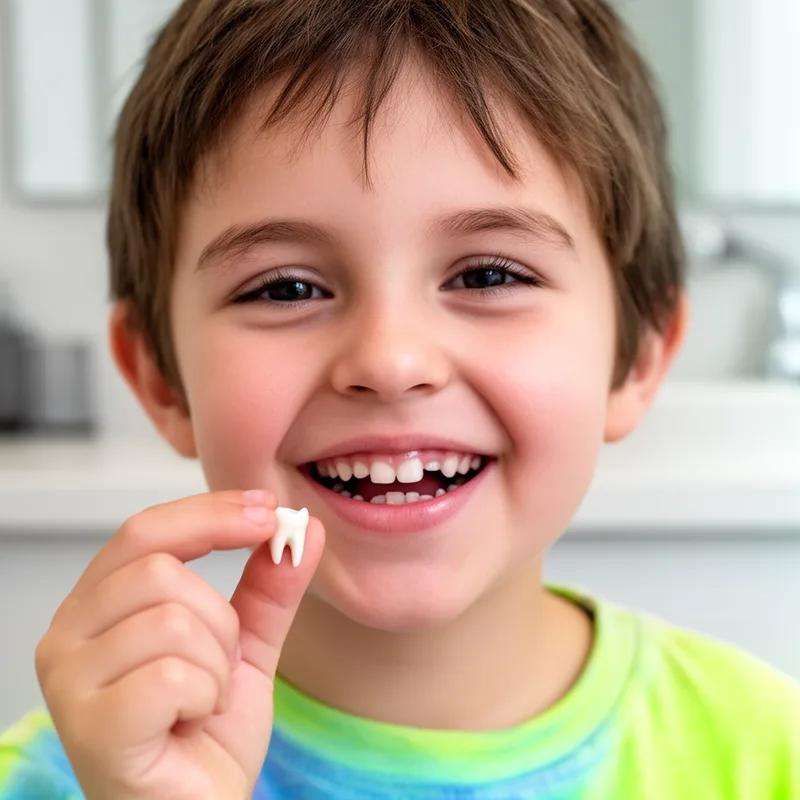
milk tooth


 1
3.4
1
3.4
- noun
- /mɪlk tuːθ/
- Parents need to take care of their child's milk teeth to ensure healthy permanent teeth later on.
- lose milk teeth
Loading YouTube…
Watch on YouTubeIts jawbone is starting to grow and I cannot believe that it already will have milk teeth in it.
- Its jawbone is starting to grow and I cannot believe that it already will have milk teeth in it.
- I cannot believe that it already will have milk teeth in it even now.
Examples
-
They still bore remnants of soft baby fur and were in the process of trading milk teeth for meat teeth.
Fiction book (1994) -
I cannot believe that it already will have milk teeth in it even now.
-
It feels like a milk tooth.
Fiction book (1999) -
They're still milk teeth.
-
Most had lost their milk teeth now, and though they still hung back in the hunt and had much to learn in the ways of the wild, every day saw them bolder and shrewder.
Fiction book (1998) -
When children lose their milk teeth, it is a sign that they are growing up.
-
The dentist explained that a child's milk teeth are usually replaced by permanent teeth around age six.
Synonyms
 14
1.2
14
1.2
A tooth that children have before their adult teeth grow
 1
3.1
1
3.1
A child's first tooth that falls out when an adult one grows
 1
3.3
1
3.3
A child's baby tooth that falls out and is replaced by an adult tooth
Surface Forms
Morphology
The meaning is directly compositional: 'milk' evokes infancy/nursing and 'tooth' is literal, so a learner who knows both words can infer it refers to a child's/temporary tooth. This construction is cross-linguistically common (e.g. Spanish 'diente de leche', French 'dent de lait'), supporting immediate understandability at B1.
Etymology
Milk tooth comes from a simple picture: these are the first teeth a baby has while it drinks milk. They are called that because they are 'temporary' and later fall out and are replaced by adult teeth.