
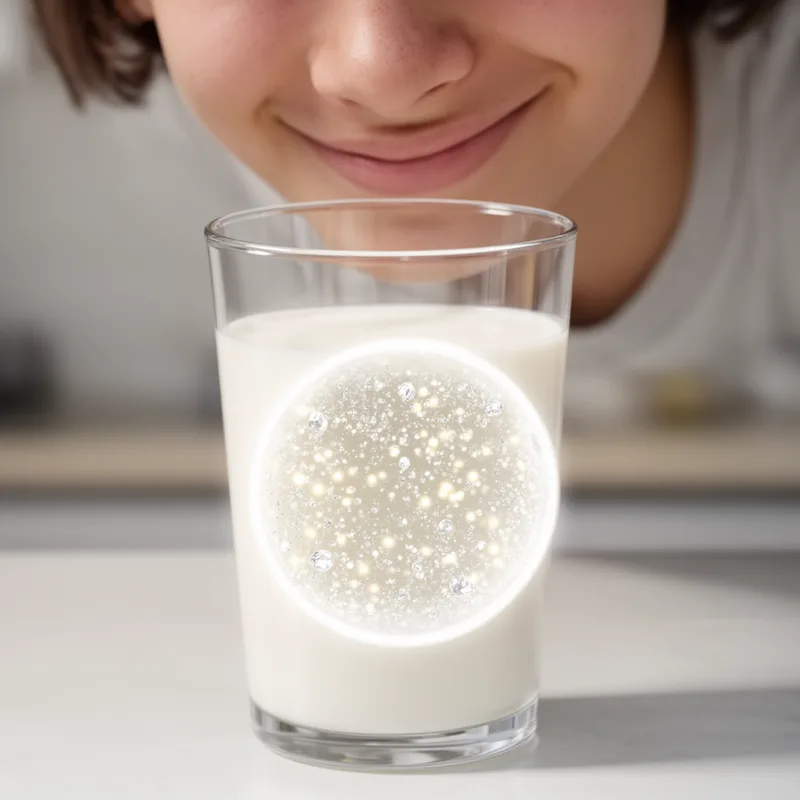
milk sugar


 1
2.7
1
2.7
- noun
- /mɪlk ˈʃʌɡər/
- Specialized
- The digestion of milk requires an enzyme, lactase, to digest the milk sugar lactose.
- milk sugar (lactose)
- digest the milk sugar
- breaks down milk sugar
Loading YouTube…
Watch on YouTubeThere's no fat in skim milk, so all that's left is the protein, which is good, and lactose, which is a milk sugar that breaks down into galactose and glucose.
- There's no fat in skim milk, so all that's left is the protein, which is good, and lactose, which is a milk sugar that breaks down into galactose and glucose.
Examples
-
There's no fat in skim milk, so all that's left is the protein, which is good, and lactose, which is a milk sugar that breaks down into galactose and glucose.
-
I prefer semi skimmed milk sugar for those of you with a sweet tooth.
-
Robin's house - evening. He sees Henry watching Robin mix the half-kilo of heroin with milk sugar, doubling the amount.
Fiction book (1990) -
But in 1980, ARS used a bacterium to produce an enzyme that breaks down the milk sugar responsible for the indigestion problem.
Academic text (2003) -
Another common disaccharide is lactose (milk sugar), which is a combination of glucose and galactose.
Blog text (5) -
By November, Moyer had succeeded in increasing the yield of penicillin by creating a better growth medium with the addition of corn steep liquor, an inexpensive byproduct of wet corn milling, and milk sugar.
Academic text (2002) -
Lactose, or milk sugar, is found in significant amounts in dairy products like cheese and yogurt.
-
People who are lactose intolerant have difficulty digesting milk sugar due to a lack of the enzyme lactase.
-
Many baby formulas are designed to mimic human breast milk by including milk sugar for added nutrition.
Synonyms
 35
3.4
35
3.4
A sugar in milk that is made of two smaller sugars
Surface Forms
Morphology
The compound 'milk sugar' is a direct, compositional combination of 'milk' + 'sugar' and denotes the sugar that occurs in milk (i.e., lactose). A B1 learner who knows both constituent words would readily infer this literal meaning; similar transparent compounds exist in other languages (e.g., German 'Milchzucker'), supporting immediate comprehensibility.
Etymology
Milk sugar comes from a simple picture: it is the sugar in milk. People used this plain name to refer to the substance now called 'lactose', so the phrase means 'the sugar found in milk'.