
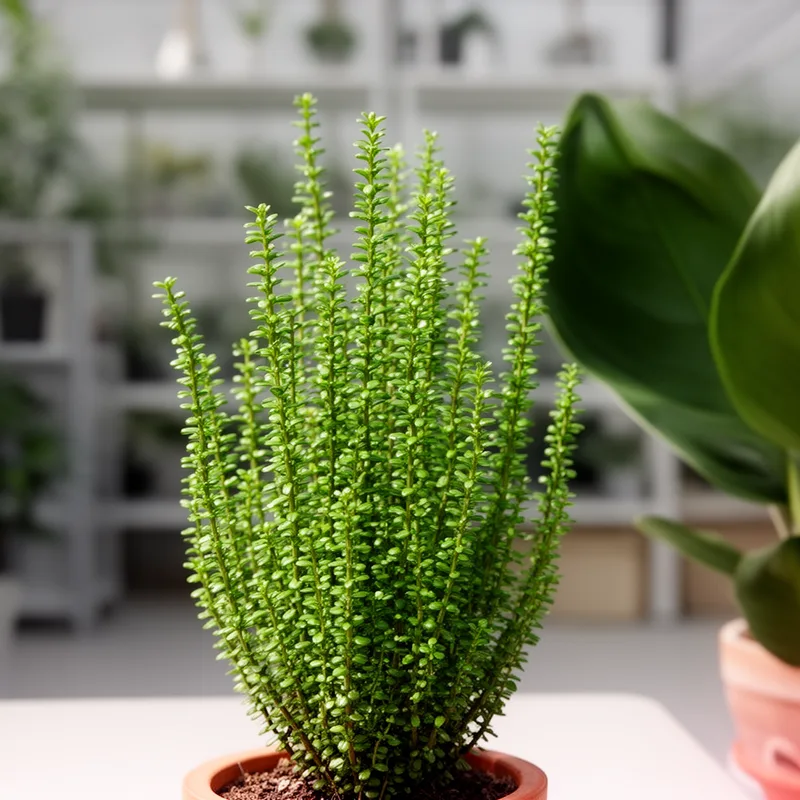
microphyllous
- adjective
- /ˌmaɪkrəˈfɪləs/
- Specialized
- Many desert plants are microphyllous, adapting to their surroundings with small leaves that minimize water evaporation.
- microphyllous leaf
Examples
-
Winter annuals and grasses from the same desert communities are also mostly narrow or microphyllous.
Academic text (1998) -
Cross-sections of the microphyllous leaf and photosynthetic young stem of cheesebush, Hymenoclea salsola, from the California deserts.
Academic text (1998) -
However, the microphyllous leaf would, on the same hot day, remain below lethal temperatures and within several degrees of ambient temperature, even without transpiration.
Academic text (1998) -
Many microphyllous desert shrubs show substantial uptake of CO2 even when soils are relatively dry and shoot water potentials drop to -3 or even -5 MPa, well below the maximum leaf water stress resistance of typical mesophytes.
Academic text (1998) -
The microphyllous plants in the arid landscape conserve water by having small, efficient leaves.
-
In harsh environments, microphyllous species thrive due to their ability to reduce moisture loss through tiny leaf structure.
Synonyms

Having small leaves on a plant or tree
How Small
- Specialized

Surface Forms
Morphology
microphyllous = phyllous (semi-transparent) = micro + phyll + ous
The adjective is built by adding micro- 'small' to phyllous, but the botanical base and specialized sense make the whole word less directly inferable for general learners.
Etymology
Microphyllous comes from Greek parts micro- 'small' and -phyllous from phyllon 'leaf', just like chlorophyll uses phyll- for 'leaf'. So, a microphyllous plant is one that has very small leaves.

