

metro cattolico
- noun
- /ˈmɛtroʊ kɑːˈtoʊlɪkoʊ/
- Archaic
- In his 1675 proposal, Burattini described the metro cattolico as based on the seconds pendulum.
Examples
-
The metro cattolico was nearly, but not exactly, the same length as the contemporary metre.
-
Historians of measurement sometimes refer to the metro cattolico when discussing early attempts at standardization.
-
The metro cattolico was defined in the 17th century.
-
In historical texts, the metro cattolico often appears.
-
In his 1675 proposal, Burattini described the metro cattolico as based on the seconds pendulum.
-
Historians of measurement sometimes refer to the metro cattolico when discussing early attempts at standardization.
-
The metro cattolico was nearly, but not exactly, the same length as the contemporary metre.
Synonyms

 3
3.2
3
3.2

A fixed amount used as a standard to measure length, weight, or volume
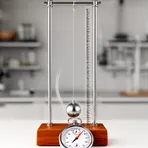
A former unit of length based on a pendulum that swings once in one second
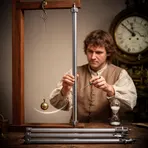
A historical measure of length equal to the length of a pendulum that takes one second to swing

A unit for length like a meter or inch

A way to measure length, like a meter or inch
Surface Forms
Morphology
metro + cattolico
The phrase is Italian (literally 'catholic metre' from metro = metre/meter and cattolico = catholic), but the historical technical meaning (a unit defined by the length of a seconds pendulum) is not derivable from those constituents. Knowing the literal words would not lead a B1 learner to the specialised, historically contingent sense, so the expression is idiomatic/lexicalised and unpredictable.
Etymology
Metro cattolico was an early Italian 'metre' defined by a weight on a string that swung once in a second, a simple way to fix a standard length. It was proposed by Tito Livio Burattini in 1675, and that's why the term refers to a historical measure very close to, but not exactly the same as, the modern metre.