

methylthionine chloride
- noun
- /ˌmɛθəlˈθaɪəniːn ˈklɔːraɪd/
- Specialized
- The laboratory technician added methylthionine chloride to the slide to stain the tissues for examination.
Examples
-
Treatment for cyanide poisoning may involve administering methylthionine chloride as an antidote.
-
In microbiology, methylthionine chloride is often used as a chemical indicator during certain tests.
-
The lab used methylthionine chloride for staining tissues.
-
Can you explain how methylthionine chloride works?
-
In microbiology, methylthionine chloride is often used as a chemical indicator during certain tests.
-
The laboratory technician added methylthionine chloride to the slide to stain the tissues for examination.
-
Treatment for cyanide poisoning may involve administering methylthionine chloride as an antidote.
Synonyms


 1
6.4
1
6.4
A dark green dye used to stain cells, act as an antiseptic, and treat cyanide poisoning
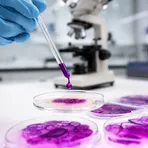
A purple dye used to stain cells or tissue for viewing under a microscope

A purplish-red dye used to color cells on microscope slides

A bright man-made dye that makes cell parts or molecules glow in experiments
Surface Forms
Morphology
methylthionine + chloride
This is a specialized chemical name: while 'chloride' clearly indicates a salt, 'methylthionine' is a technical morpheme not found in the provided dictionary and does not convey the specific senses (dark green dye, antiseptic, cyanide antidote) to a general B1 learner. The overall meaning therefore depends on domain-specific knowledge rather than straightforward composition, so it is not predictable from the parts.
Etymology
Methylthionine chloride gets its name from its parts: methyl (a small chemical piece), thionine (an old dye name), and chloride (a salt). That name helps you remember it is a blue-green dye used to stain tissues, to work as an antiseptic, and even as an 'antidote' for cyanide poisoning.