
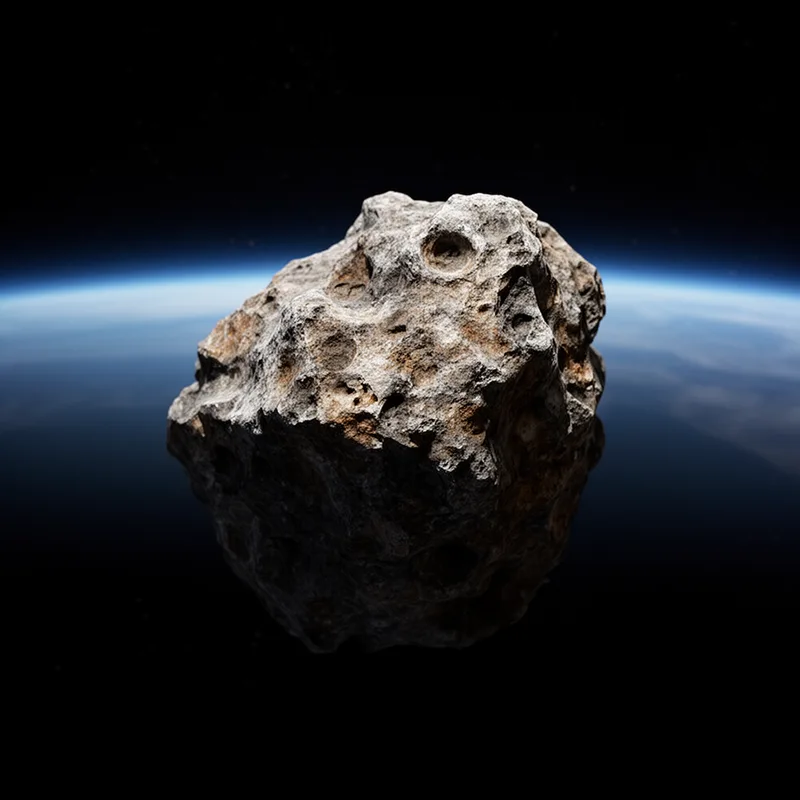
meteoroid
 3
8.5
3
8.5

- noun
- /ˈmiːtərɔɪd/
- Specialized
- Every year, countless meteoroids enter Earth's atmosphere and burn up, creating bright streaks of light in the sky.
- incoming meteoroids
- rain of meteoroids
- meteoroid enters the Earth
Examples
-
Meteoroids enter Earth's the atmosphere every day.
-
Before midnight, the meteoroids have to catch up with Earth.
Academic text (2001) -
It's the streak of light that we see when a meteoroid enters Earth's atmosphere.
Blog text (3) -
We also want to learn about the meteoroids themselves, which in turn tell us a great deal about the parent comet.
Academic text (2001) -
Only a constant rain of meteoroids slowly reshapes the surface.
Academic text (2003) -
Astronomers estimate that the meteoroid that produced the fall originally weighed 77 tons.
Academic text (1992) -
Meteors are best seen after midnight, when Earth faces the direction in which the meteoroids are colliding with our atmosphere.
Academic text (2001) -
Scientists track the paths of meteoroids to understand their origins and predict potential impacts with Earth.
-
During a meteor shower, small meteoroids can collide with the atmosphere, illuminating the night with shooting stars.
How Big
- Specialized
62
6.7

- Specialized
300
4.1
- Specialized
3
8.5
- Specialized

 1
9.8
1
9.8
- Specialized
1
6.3
Surface Forms
Morphology
Etymology
The word meteoroid begins with meteor, from an old word meaning 'something high in the air', and ends with -oid, meaning 'like'. So a meteoroid is a small 'meteor-like' rock travelling in space, and when it enters the atmosphere it becomes a meteor.