
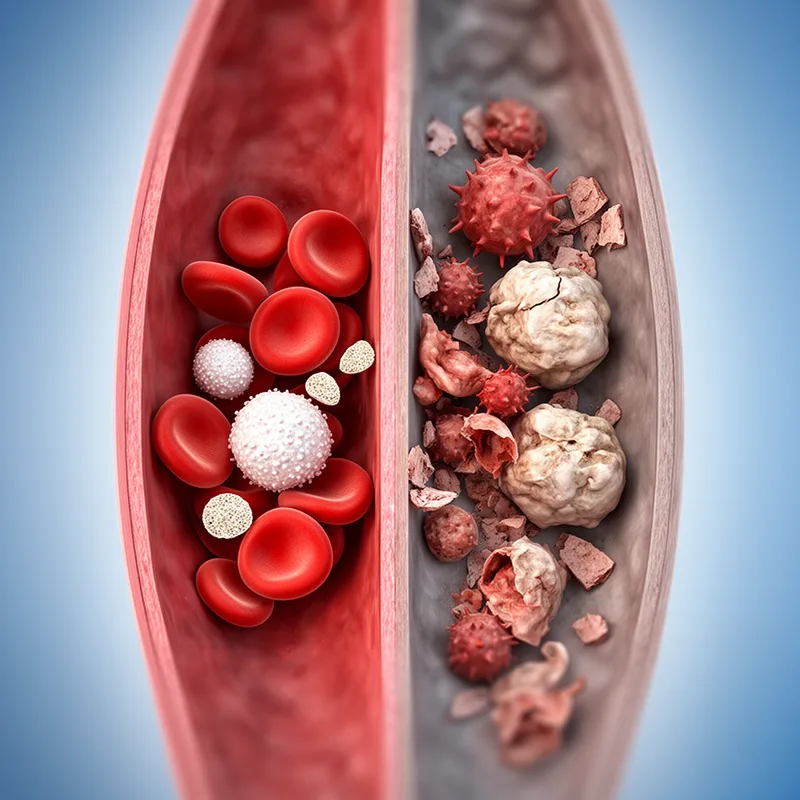
metaplastic anemia
- noun
- /ˌmɛtəˈplæstɪk əˈniːmiə/
- Archaic
- The patient was diagnosed with metaplastic anemia after laboratory tests revealed abnormal blood cell changes.
Examples
-
Unlike typical cases, metaplastic anemia involves alterations in more than one blood cell type.
-
Patients experiencing symptoms of metaplastic anemia often require immediate medical evaluation to confirm the diagnosis.
-
Doctors are researching new treatments for metaplastic anemia to improve outcomes.
-
The doctor diagnosed her with metaplastic anemia.
-
Is metaplastic anemia common in older adults?
-
The doctor explained that metaplastic anemia can lead to serious health complications if not treated promptly.
-
A recent study discussed how metaplastic anemia causes significant changes to blood cell morphology.
Synonyms



 1
5.7
1
5.7
A long-lasting blood problem where the body cannot make enough red blood cells because it cannot take in vitamin B12
Surface Forms
Morphology
The term is a straightforward adjective + noun composition: 'metaplastic' (relating to tissue transformation) modifies 'anemia' (a deficiency of red blood cells), so the phrase denotes an anemia involving metaplastic/abnormal changes in formed blood elements. Although clinical and specialist, the semantic relation is compositional and predictable, so a learner who knows both constituent meanings can infer the core sense.
Etymology
Metaplastic anemia comes from the parts meta and plastic, where meta means 'change' and plastic means 'form' or 'shape'. The name creates the image of blood cells changing form, so it refers to an 'anemia' where many blood cell types show abnormal changes.