

megaloblastic anemia
 1
6.1
1
6.1

- noun
- /ˌmɛɡəloʊˈblæstɪk əˈniːmiə/
- Specialized
- Children with megaloblastic anemia often show symptoms like fatigue and weakness due to the lack of healthy red blood cells.
Examples
-
The megaloblastic anemia responded to treatment, but developmental delay and epilepsy persisted.
Academic text (1991) -
He presented with megaloblastic anemia, microcephaly, developmental delay, and hypotonia, aged 5 months.
Academic text (1991) -
The doctor diagnosed her with megaloblastic anemia after observing her blood tests.
-
Vitamin B12 deficiency can lead to megaloblastic anemia, resulting in large, immature red blood cells in the bloodstream.
Synonyms
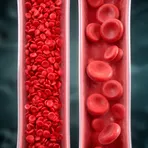
A blood condition with fewer red blood cells that are larger than normal
How Large
- Specialized
1
6.1

- Specialized
- Specialized
- Specialized
Surface Forms
Morphology
The phrase is compositionally built from 'megaloblastic' (relating to large, immature red blood cells) + 'anemia' (a condition of low/defective red blood cells), so its meaning — an anemia characterized by large immature red cells — is directly derivable from the parts. It follows regular medical compounding rather than an idiomatic shift, so a learner who knows both constituents would understand the term.
Etymology
Megaloblastic anemia comes from parts meaning mega ('large') and blastic ('young cells'), so it paints a picture of very large, immature red blood cells in the bone marrow. Because these big cells do not work well, the blood becomes weak and low in healthy red cells, which is why the term means a type of 'anemia' often due to not enough vitamin B12 or folic acid.