
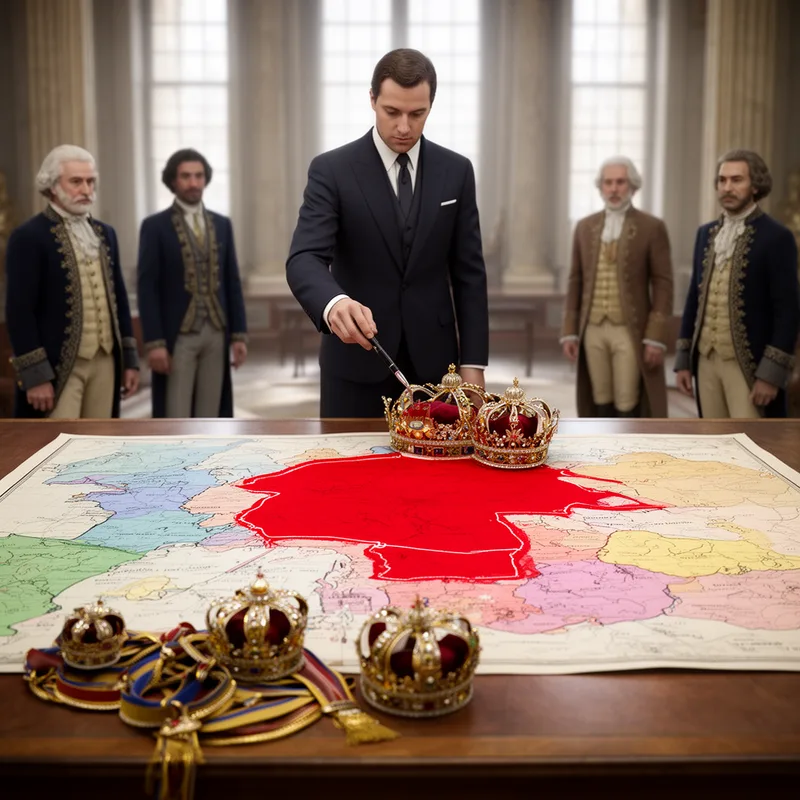
mediatization
- noun
- /ˌmiːdiətaɪˈzeɪʃən/
- Specialized
- The mediatization of small German states changed the political landscape of Europe in the nineteenth century.
Examples
-
After mediatization, many former rulers lost their titles and privileges.
-
Historically, mediatization often involved the annexation of territories.
-
Historians study the effects of mediatization on regional identities and governance.
-
The mediatization of smaller states has changed the political landscape.
-
The mediatization of smaller German states significantly influenced the unification of Germany in the 19th century.
-
Through mediatization, the independence of many small territories was diminished as they were absorbed into larger entities.
-
The process of mediatization often reshaped local governance structures and diminished the power of individual princes.
Synonyms
 16
7.5
16
7.5

The act of a country adding land to make it its own
Antonyms
 608
3.0
608
3.0
Freedom from control by others, for example when a country is free or a person supports themselves
How Independent
608
3.0

- Formal
53
6.7
60
3.6
- Specialized
16
7.5
Surface Forms
Morphology
Etymology
Mediatization comes from mediate, which means to be 'in the middle' or between two powers. A helpful way to remember the historical sense is that small states were put 'between' larger ones and lost direct independence, so they were 'mediatized'.