
mediate
- adjective
- /ˈmidiˌeɪt/
- It suggests that God and creatures are on a sort of continuum, the creature (and its relationships) a sort of mediate instantiation of the divine life.
Loading YouTube…
Watch on YouTubeSo it's both immediate and mediated at the same time.
- So it's both immediate and mediated at the same time.
- And increasingly in our connected Internet mediated world, that's that's the case.
- It's one that's mediated more conceptually.
- Now that area is is bolstered, bolstered up by meditation, they found, and it has a mediating influence on the amygdala.
Examples
-
Japan is not the most networked country in the world, but the quality of relationships online and digitally mediated is very, very strong.
-
Well, Freud says the rational sort of verbally mediated thinking brain goes to sleep.
-
So it's both immediate and mediated at the same time.
-
It's one that's mediated more conceptually.
-
And increasingly in our connected Internet mediated world, that's that's the case.
-
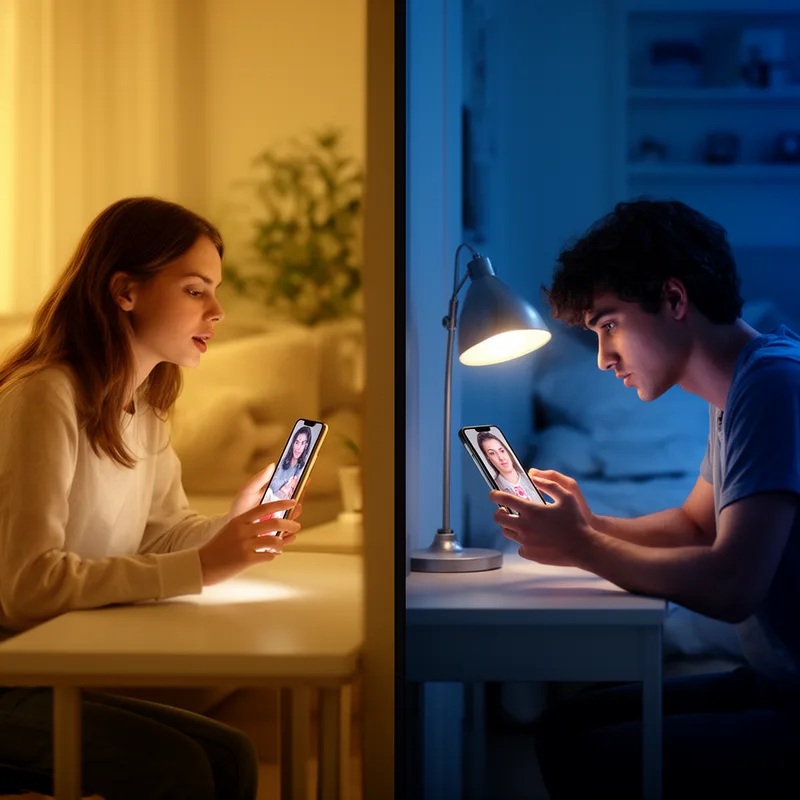
In a digitally mediated environment, friendships can form and thrive without face-to-face interaction.
-
The research highlights how art can be mediated through technology, allowing broader access to culture.
-
Communication often becomes mediated by social media platforms, influencing how messages are shared and received.
Synonyms

Arranged through a neutral person so people do not meet directly
Antonyms


How Direct

Surface Forms
Morphology
mediate = middle (semi-transparent) = medi + ate
The adjectival sense 'acting through an intervening agent' is conceptually linked to 'middle', though the Latinate form and suffix may obscure the relation for learners.
Etymology
Mediate comes from the Latin medius 'middle'. As an adjective, it describes something that works by a middle step or agent rather than directly, so a mediate effect happens through a link or process.