
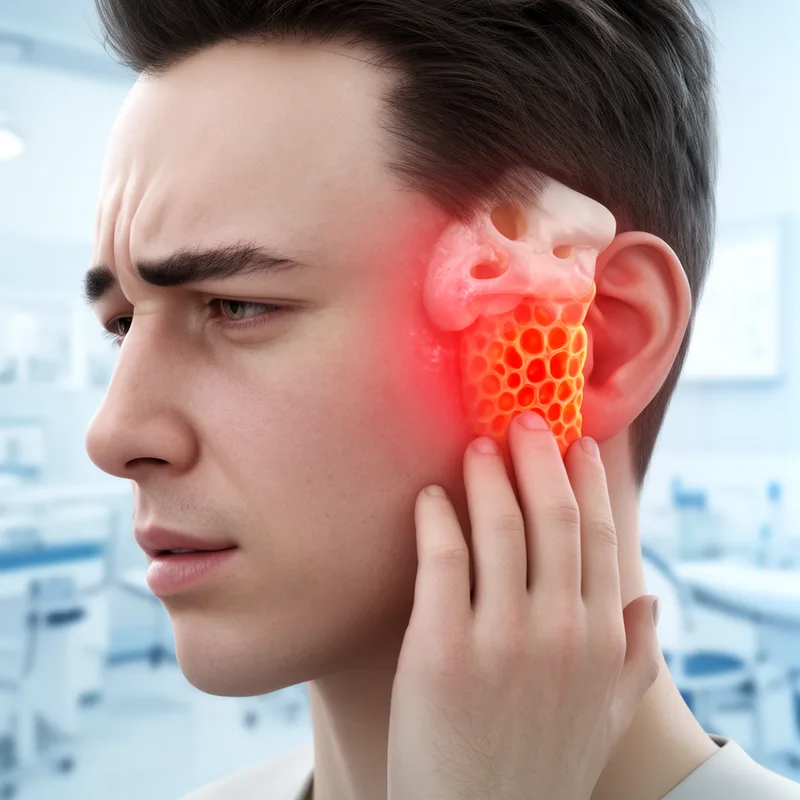
mastoiditis


 1
8.6
- noun
- /ˌmæstəʊɪˈdaɪtɪs/
- Specialized
- Symptoms of mastoiditis may include fever, pain behind the ear, and a discharge from the ear canal.
- diagnosis of mastoiditis
- diagnosing mastoiditis
- chronic mastoiditis
Examples
-
Evaluation by an otolaryngologist should be reserved for signs of mastoiditis, including indications of AOM with postauricular swelling and erythema.
Academic text (2008) -
The doctor diagnosed him with mastoiditis after he experienced severe ear pain and swelling near his ear.
-
Many times, patients have been told they have mastoiditis but have received little additional counseling.
Academic text (2008) -
Most had no physical findings suggestive of mastoiditis.
Academic text (2008) -
Our 28 patients were clearly outside the pediatric age group, in which AOM and mastoiditis are typically found.
Academic text (2008) -
Dr. Roland: The incidence of mastoiditis probably relates in some way to chronicity.
Academic text (2002) -
Our findings reinforce our belief that MRI is undesirable as a screening study for mastoiditis.
Academic text (2008) -
Mastoiditis is a factor in children with a discharging grommet, otitis media with effusion, or acute otitis media.
Academic text (2002) -
Children with untreated ear infections can develop mastoiditis, leading to serious complications.
Surface Forms
Morphology
Etymology
Mastoiditis comes from the Greek parts masto- meaning 'breast' because the bone behind the ear is a small, breast-like shape, and -itis meaning 'inflammation', as in tonsillitis. So, mastoiditis is an 'inflammation' of the mastoid bone behind the ear.