
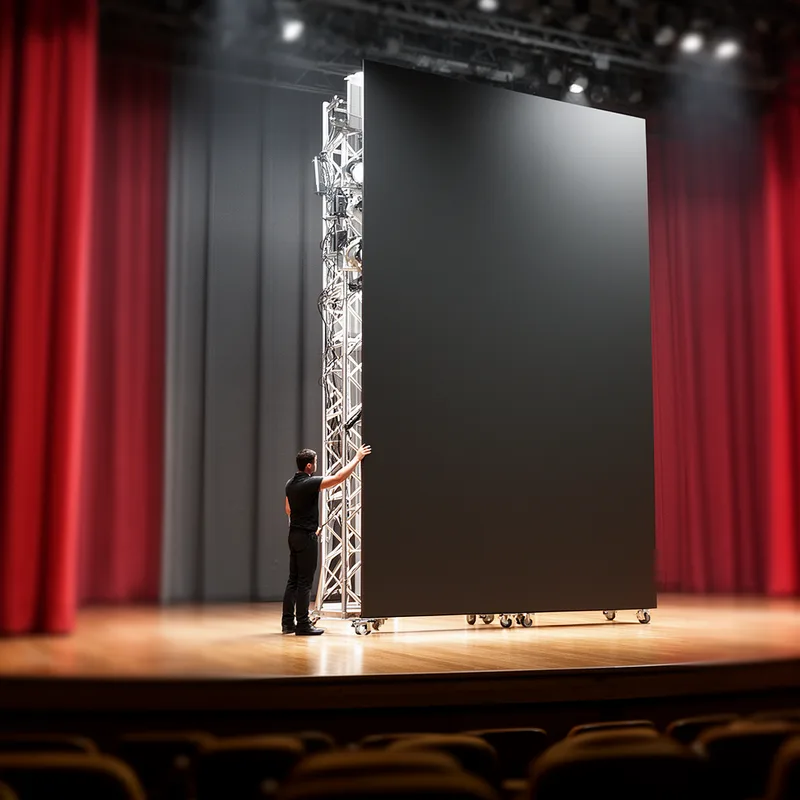
masking piece
- noun
- Jargon
- The stage manager adjusted the masking piece to ensure the audience couldn't see the wings.
Examples
-
The stage crew placed a masking piece to hide the backstage area.
-
A tall masking piece was placed at the side of the stage to hide the lighting equipment.
-
Designers debated where to position the masking piece for the best concealment of scenery changes.
-
Can you adjust the masking piece for better visibility?
-
A tall masking piece was placed at the side of the stage to hide the lighting equipment.
-
Designers debated where to position the masking piece for the best concealment of scenery changes.
-
The stage manager adjusted the masking piece to ensure the audience couldn't see the wings.
Synonyms
 15
3.0
15
3.0

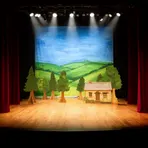
Painted backgrounds and pieces on a stage that show where a play happens
 6
7.1
6
7.1
A large painted curtain lowered onto a stage as a background
 1
8.0
1
8.0
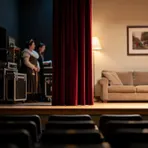
A narrow curtain at the side of a stage to hide the wings
 1
6.8
1
6.8
A single item of stage scenery like a painted tree

 1
9.9
1
9.9
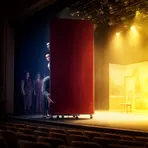
A flat piece at the side of a stage that hides the area where actors wait

A flat painted board at the side of a stage that hides backstage and makes the scene look deeper

A large heavy cloth that hides the stage and opens or closes for a show

A large curtain hung above the stage that lowers to make background scenery
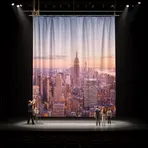
A large curtain that people lower from above to make a background on a stage

A large cloth that hangs at the back of a stage as scenery
How Concealing

Surface Forms
Morphology
The meaning 'a piece of scenery used to block the audience's view' is directly derivable from combining 'masking' (covering or hiding) with 'piece' (a portion/object) — literally a 'piece that masks'. This is a regular compound noun formation and is cross-linguistically transparent, so a B1 learner who knows both constituents should be able to infer the meaning.
Etymology
The noun masking piece comes from the theatre, where a flat piece at the side of the stage was used for masking, which means 'to hide' the wings and equipment. So a masking piece is a piece of scenery used to block the audience's view.