
to mask
 10
6.3
10
6.3

- verb
- /mæsk/
- Specialized
- To ensure privacy, we need to mask sensitive data before sharing it with external partners.
- mask the bone
Examples
-
At My Info Quest, users' phone numbers are masked in all reference transactions, and a user ID number is displayed instead.
Academic text (2014) -
First thing, as I said, is we're going to mask the important bits.
-
It's used to mask the origin of an email, as well as the computer from which it's sent.
Fiction book (2000) -
We can mask our IP addresses.
-
I can now mask the areas that I don't want to print and start the back covers.
-
I can also mask portions of the text, isolating one paragraph or one line at a time.
Academic text (1996) -
That's why we're using our PIAVPN to mask that initial jump.
-
When objects are masked, low-level visual features are obscured.
Academic text (2018) -
The graphic designer will mask certain areas of the image to focus attention on the subject.
-
Before processing the file, we must mask the confidential information it contains.
Phrasal Verbs


Compounds
 15
3.4
15
3.4
A covering you wear over the nose and mouth to give oxygen in emergencies or medical care
 4
1.4
4
1.4
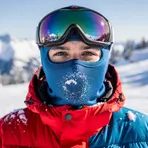
A covering worn over the nose and mouth to protect against dust, germs, or pollution



 1
4.0
1
4.0
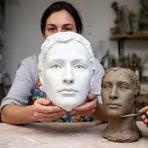
A mask that covers the upper part of the face, leaves the mouth visible, and has holes for the eyes

- Specialized
1
4.0
A face cover that protects your eyes and face from sparks, bright light and heat during welding

- US
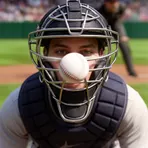
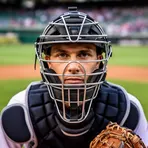
A protective face guard made of metal bars used by the catcher in baseball or softball

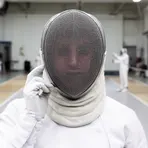
A protective face covering made of wire mesh worn by someone who fences to stop sword hits


A face cover like the one Hannibal Lecter wears that covers the lower face and looks scary

How Selective

Surface Forms
Etymology
Mask comes from Italian maschera, the idea of hiding part of a face, and in computing we use the same picture as a verb. So, to mask data or pixels is to apply a cover that hides or selects only the parts you need.