
mandate
 271
6.0
271
6.0

- noun
- /ˈmænˌdeɪt/
- Literature
- To what extent do schools and districts comply with state or federal mandates and policies?
- electoral mandate
- broad mandate
- weak mandate
Loading YouTube…
Watch on YouTubeOf course we have our mandate that give us the leverage.
- Of course we have our mandate that give us the leverage.
- And the heart of that mandate is our manifesto.
- So I think our government definitely has a mandate to push through action.
- So it means that none of these governments has had a genuine popular mandate.
- But traders continue to sell the peso on fears of radical constitutional change after voters handed a huge mandate to the president-elect.
Examples
-
So I think our government definitely has a mandate to push through action.
-
Strong agreement could be considered a mandate for moving forward rapidly on the initiative.
Academic text (2012) -
I mean, I do think it's a mandate given the size of the win.
-
Listen, I have a mandate from a population, right, of hundreds of millions of people.
-
I recognize though, given the situation, I cannot deliver the mandate on which I was elected by the Conservative Party.
-
Indeed, it did not have the mandate or the authorization to do so.
Academic text (2011) -
School librarians have a responsibility, even a mandate, to lead and advocate for intellectual freedom in our schools.
Academic text (2015) -
We are all aware of the new mandates that tie teacher evaluations to student achievement.
Academic text (2013) -
Perin found that some of the state mandates were not strictly implemented in practice.
Academic text (2011) -
The new administration claimed it had a strong mandate to implement its proposed reforms after winning the election by a large margin.
Compounds

- Literature
A traditional Chinese idea that Heaven gives emperors the right to rule while they govern well
Surface Forms
Etymology
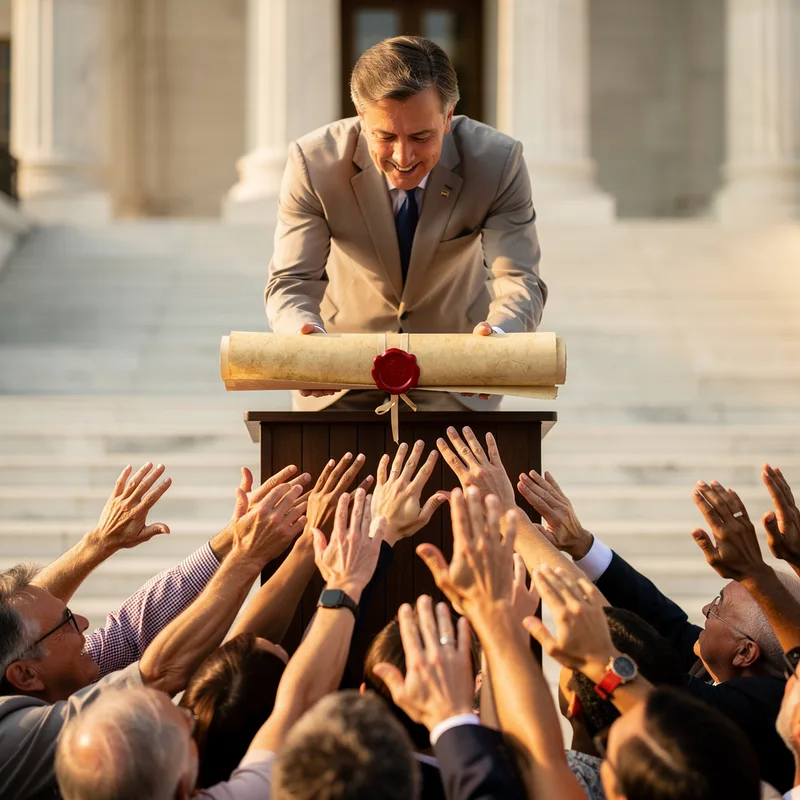
Mandate comes from the Latin mandare, which means 'to hand over', and comes from manus 'hand' plus dare 'to give'. When voters 'hand' power to a government after an election, people call that a mandate because it is the authority given to govern.