
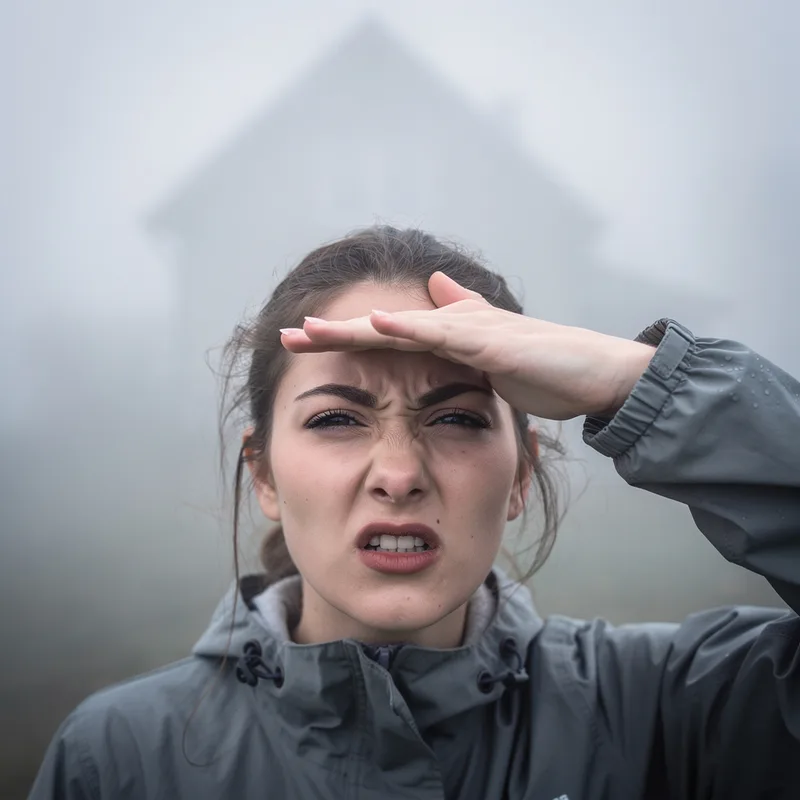
to make out
 109
4.6
109
4.6

- phrasal verb
- /meɪk aʊt/
- Even in the poor light, Green Water could make out the piled mounds of glacial rock.
- barely make out
- make out the words
- make out details
Loading YouTube…
Watch on YouTubeIt takes effort to make out their words.
- It takes effort to make out their words.
- And I cannot make out what it is that time will do to them.
- What, because the only thing that I made out was she grabbed him by the hips.
- Yeah, I just, I can't make out any problem here.
- I promise to read to you whatever you can't make out yourself.
- The Doppler effect is one of the main ways that we make out.
Examples
-
Even in the low lights of her hair, I can make out individual hairs.
-
In the shadow of the doorway, Damien made out the form and features of a woman.
Fiction book (1991) -
I can still make out activity.
-
I hear him talking to her, although I cannot make out what he is saying.
Fiction book (1990) -
But if you put your ear down to him, you could make out what he was saying.
-
The cloud cover was so low that I could barely make out the highest towers.
Academic text (2009) -
It takes effort to make out their words.
-
In the far distance, I could just make out a range of snow-topped mountains.
Fiction book (1990) -
Looking closely, we can make out another, smaller anthropomorphic rock behind the first one.
Academic text (2006) -
With the fog so thick, I could hardly make out the street signs.
Synonyms
 ∞
1.4
∞
1.4
To understand what someone says or an idea
 ∞
1.0
∞
1.0
Notice sounds with your ears
 576
2.1
576
2.1
To notice someone or something, especially when it is hard
 177
3.1
177
3.1
To notice differences between things or people
 70
5.8
70
5.8
To notice something that is hard to see or hear
 64
3.0
64
3.0
Notice a sound or sight among other things
 41
3.0
41
3.0
To notice a difference between two similar things
 9
4.3
9
4.3
To understand the meaning of something
Antonyms
How Clear
- US
∞
1.4
 109
4.6
∞
1.0
576
2.1
41
3.2
518
1.7
109
4.6
∞
1.0
576
2.1
41
3.2
518
1.7
Surface Forms
Morphology
The sense 'to kiss or have sexual activity' is an informal idiomatic reading of the phrasal verb that cannot be derived from the literal meanings of 'make' (to do or produce/succeed) and 'out' (away/outside). Because the expression is slangy, polysemous, and culture-specific rather than compositionally built from its parts, a B1 learner who only knows the constituents but has not seen the idiom would not reliably infer this meaning.
Etymology
Make out comes from the simple picture of making a shape out of the dark: to make details out so you can see or hear them clearly. That's why it means 'to manage to see, hear, or understand'.