

mace
 3
9.0
3
9.0

- noun
- /meɪs/
- Men, women, and even kids held longswords, daggers, nasty-looking pikes, and maces.
- a heavy mace
- a spiked mace
- a battle mace
Examples
-
In the armory, various weapons were on display, including a fearsome mace with spikes along its head.
-
If Morgan needs a hand weapon, tell him it's OK to use the mace.
-
I guess Little John's mace is too heavy.
-
Kimbal ran toward me, wielding a sword in one hand and a wicked mace in the other.
Fiction book (1991) -
There, before the tent, they smash their lances, crack their maces, then fall upon the ground.
Fiction book (1997) -
Andean warriors protected themselves with quilted tunics and rectangular shields, and armed themselves with spears, spear-throwers, slings, and maces with stone heads.
Academic text (2010) -
The knight raised his mace high and charged into battle, ready to strike his enemies.
-
During the medieval fair, demonstrations included knights wielding heavy maces to showcase their combat skills.
Synonyms
 ∞
1.0
∞
1.0
A tool like a gun that people use to hurt or kill
 119
1.9
119
1.9
A thick heavy stick used to hit things or for protection
 4
7.6
4
7.6
A thick heavy stick or club used as a weapon
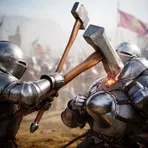

 1
7.9
1
7.9
A heavy hammer with a long handle used in battle to break armor
 1
7.4
1
7.4
A short heavy stick used to hit a ball or as a weapon
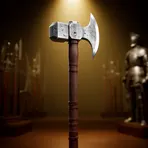
A weapon with a hammer head on one side and an axe blade on the other for fighting
Compounds
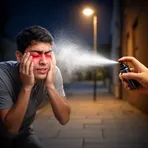
A liquid spray that makes eyes burn and makes people feel dizzy so they cannot move

- UK
A tall marsh plant with long flat leaves and long brown seed heads used for weaving mats and chair seats
How Heavy

Surface Forms
Etymology
Mace for the medieval weapon comes from an old word meaning 'heavy club' or 'lump', like the English mass, because it is a heavy, blunt instrument used to hit with force.