
lysozyme
- noun
- /ˈlaɪsəˌzaɪm/
- Specialized
- It's because they contain a bacteria fighting enzyme called lysozyme, which keeps them fresh.
- lysozyme enzyme
Examples
-
Similarly, removal of bacterial cell walls through lysozyme, autolysin, or penicillin results in massive lysis in low-osmotic-strength media.
Academic text (1993) -
Blood natural resistance factors (complement, lysozyme, etc.) are not effective if infection enters the blood from the tissues.
Academic text (2017) -
The early structures for lysozyme, ribonuclease, carboxypeptidase, and chymotrypsin each provided critical insight into the mechanism of catalytic action.
Academic text (1995) -
In 1992, Quan found that microwaved breast milk lost lysozyme activity, antibodies, and fostered the growth of more potentially pathogenic bacteria.
Blog text (25) -
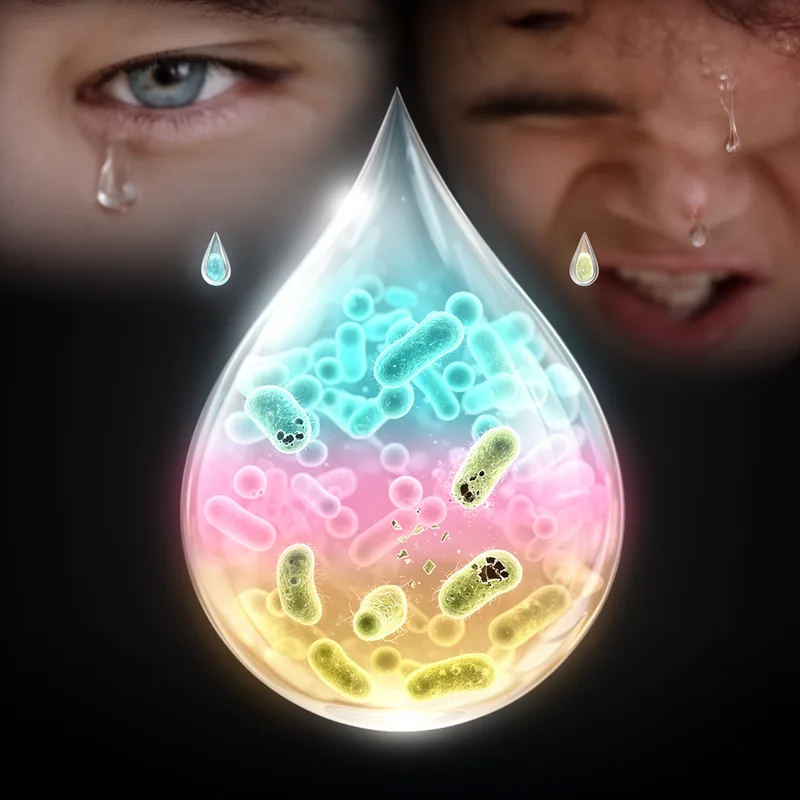
The enzyme lysozyme in tears destroys bacteria, providing protection against infection.
-
In saliva, lysozyme plays an important role in breaking down bacterial cell walls, aiding oral health.
-
The presence of lysozyme in breast milk helps shield infants from harmful bacteria during their early development.
Synonyms

A natural substance in saliva, sweat, and tears that breaks the cell walls of some bacteria

A protein made by viruses that infect bacteria that breaks their cell walls

A protein that breaks the walls of bacteria and makes them burst

A substance that breaks open cells, like an antibody or enzyme
Surface Forms
Morphology
lysozyme = enzyme (semi-transparent) = lyso + zyme
The word is clearly an enzyme (recognizable from 'enzyme'), but the combining form 'lyso-' (meaning to break down/lyse) is a technical element that a typical B1 learner is unlikely to know, so only the 'enzyme' part is immediately obvious.
Etymology
The word lysozyme comes from Greek parts lysis meaning 'to break' and zyme meaning 'enzyme'. So a lysozyme is an 'enzyme that breaks', which is why it destroys the cell walls of some bacteria in saliva, tears, and sweat to help protect the body.

