
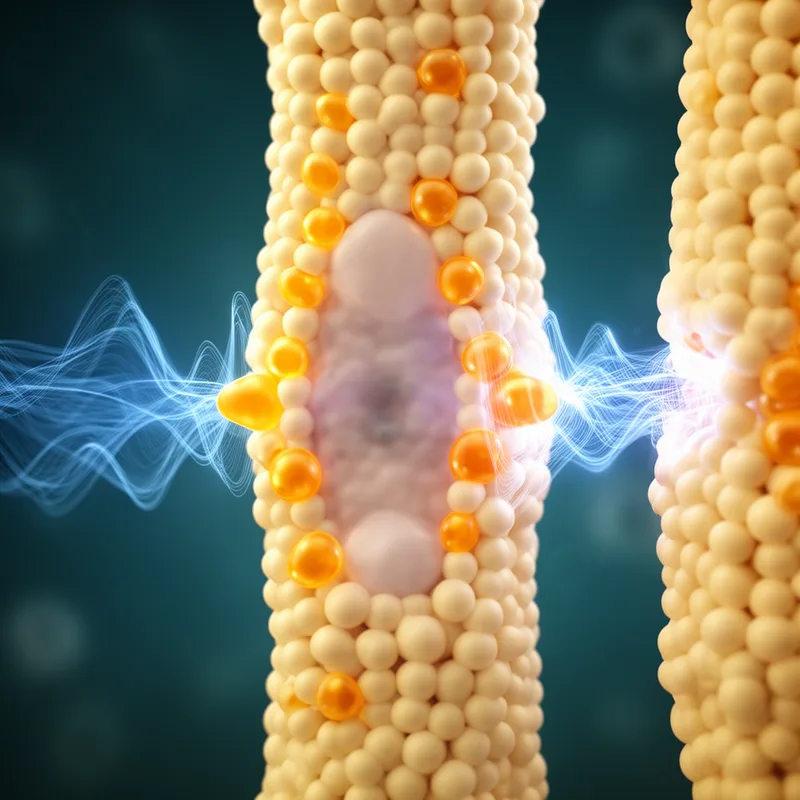
lysolecithin


 1
9.9
- noun
- /ˌlaɪsoʊˈlɛsɪθɪn/
- Specialized
- Some laboratory tests use lysolecithin to investigate nerve cell function.
Examples
-
The presence of lysolecithin can alter the structure of biological membranes.
-
Researchers studied the effects of lysolecithin on cell membranes.
-
The study focused on lysolecithin as a potential signaling molecule.
-
Researchers found that lysolecithins play a role in cell communication.
-
Researchers found that lysolecithin plays a crucial role in cell signaling within biological membranes.
-
In their study, the scientists measured the levels of lysolecithin in various cell types to understand its biological function.
-
Lysolecithin is often investigated for its potential impact on membrane integrity and cellular communication.
Surface Forms
Morphology
Etymology
Lysolecithin combines lyso- meaning 'to break' or 'loosen' and lecithin meaning 'egg yolk', a common substance in foods. So, lysolecithin is a form that can loosen parts of cell membranes and thus can change membrane behavior or act as a signal.