
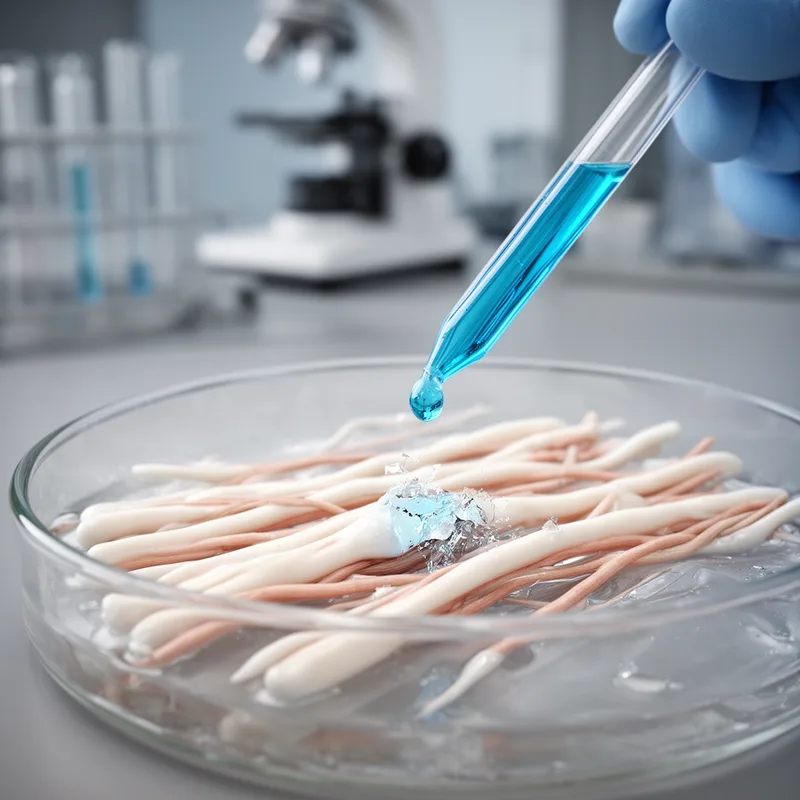
lysolecithin
- noun
- /ˌlaɪsoʊˈlɛsɪθɪn/
- Specialized
- The injection of lysolecithin allowed researchers to study the process of myelin repair.
Examples
-
Scientists use lysolecithin to induce demyelination in animal models of nerve injury.
-
In the lab, lysolecithin is essential for creating localized demyelination.
-
By applying lysolecithin to nerve tissue, the team observed changes in cell behavior.
-
The researcher used lysolecithin to study myelin disruption.
-
Scientists use lysolecithin to induce demyelination in animal models of nerve injury.
-
The injection of lysolecithin allowed researchers to study the process of myelin repair.
-
In the lab, lysolecithin is essential for creating localized demyelination.
Surface Forms
Morphology
Etymology
Lysolecithin comes from lyso- meaning 'to break' and lecithin meaning 'egg yolk'. So, scientists use lysolecithin to break the fatty insulating layer around nerves to create a small area of damage and study how repair happens.

