
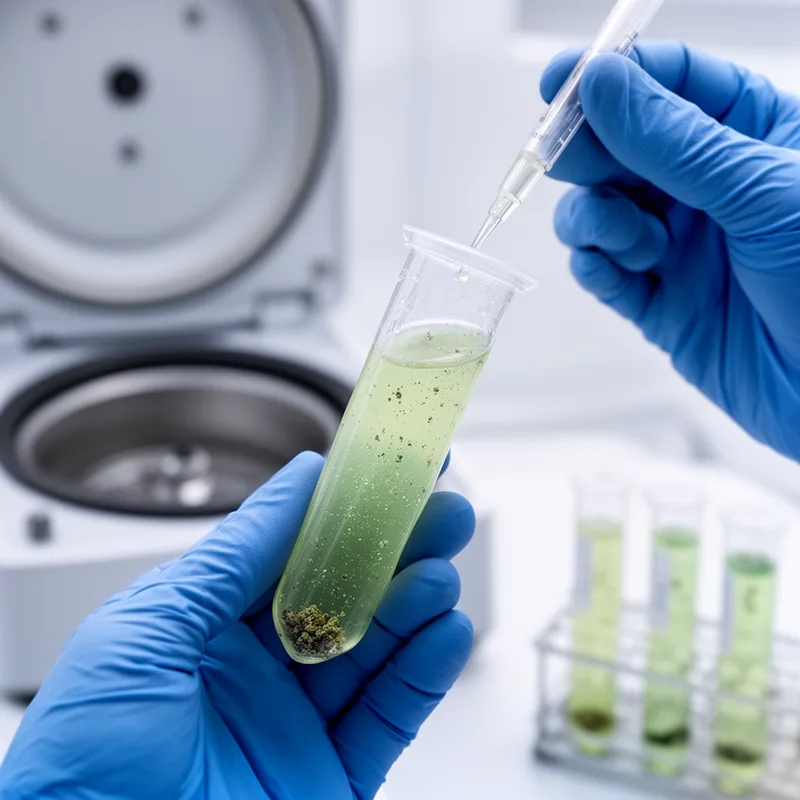
lysate
 1
9.1

- noun
- /ˈlaɪseɪt/
- Specialized
- In the laboratory, we prepared the lysate from the broken cells for analysis.
- cell lysate
Examples
-
A total of 4 ml of worm lysate was used as a PCR template.
Academic text (2017) -
Lysate was serially diluted, plated on agar plates by the track method, and CFU were counted the next day.
Academic text (2017) -
Plate lysates were used in all of the experiments described below.
Academic text (2003) -
For PCR, 2 L of a 1:400 dilution of lysate was used.
Academic text (2012) -
We demonstrate that Beclin 1 is cleaved in brain lysates of human AD patients.
Academic text (2018) -
The lysate was saved in fresh Eppendorf tubes, which were subsequently stored at -20°C until further use.
Academic text (2014) -
Crude lysates were centrifuged at 12,000 g for 10 min at 4 degrees C to remove cellular debris.
Academic text (2018) -
Clarified lysates were quantified with a Pierce BCA protein assay.
Academic text (2018) -
We then calculated the amount of TF per cultured islet after quantifying TF in the lysates by ELISA.
Academic text (2002) -
To determine whether Beclin 1 cleavage occurs in the context of a neurodegenerative disease, we performed Western blot analysis on the RIPA-soluble fraction of cortical brain lysates from AD patients and healthy controls.
Academic text (2018)
Surface Forms
Morphology
Etymology
The word lysate comes from the Greek root lys- meaning 'to break', and you can see the same root in analysis, where it means 'breaking down'. The ending -ate means 'a product'. So a lysate is the product you get when cells are broken open and their contents are released.