

lynx
 4
6.2
4
6.2

- noun
- /lɪŋks/
- The lynx is a wildcat known for its tufted ears and thick fur, making it well-adapted to cold climates.
- Iberian lynx
- endangered lynx
- lynx specimens
Examples
-
The Iberian lynx and many other predators were severely persecuted in Spain and Portugal until the late 1980s.
Academic text (2012) -
the lynx roams hundreds of miles in search of prey
-
In the Iberian Peninsula, a paradigmatic example is the endangered Iberian lynx (Lynx pardinus).
Academic text (2012) -
In Spain's Coto Donana National Park, Iberian lynx prey on Egyptian mongooses, which consequently avoid areas inhabited by the cats.
Academic text (1998) -
There were buffalo robes for beds, lots of deer and elk hides, and bales of beaver, marten, and lynx furs stacked up along one side.
Fiction book (1994) -
In the dense forests of Canada, the lynx hunts for snowshoe hares under the cover of night.
-
Conservation efforts are underway to protect the lynx, whose population has been declining due to habitat loss.
Synonyms
 ∞
1.0
∞
1.0
A small, furry pet or a large wild animal like a lion
 64
1.0
64
1.0
An animal that lives in nature and is not kept by people
 49
3.0
49
3.0
A small or medium wild animal like a cat that lives in forests and open fields
 41
1.6
41
1.6
An animal of the cat family like a house cat or lion
Compounds

- US
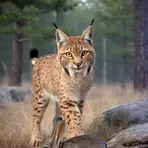
A medium wild cat with ear tufts and a short tail that lives in the forests of northern North America

- UK
A large wild cat with tufted ears and a short tail that lives in northern Europe and Asia

- Specialized
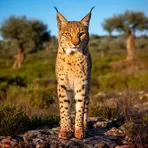
A rare wild cat from Spain and Portugal with spotted fur and a short tail
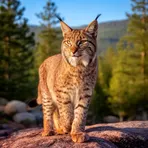
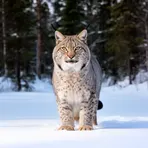
- Specialized
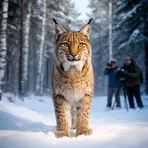
A wild cat called the Canada lynx that lives in northern North America
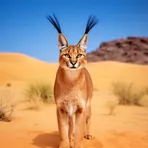
- Indian
A wild cat with long black hairs on its ears that lives in deserts in northern Africa and southern Asia

Surface Forms
Etymology
Lynx comes from an old Greek word lúnx that people linked to 'light' because the animal's eyes seemed to shine. So a lynx today is a wildcat known for very sharp sight and bright, shining eyes.