

Lynx rufus
- noun
- /lɪŋks ˈruːfəs/
- Specialized
- The Lynx rufus has adapted to a wide variety of habitats across North America.
Examples
-
Unlike its Eurasian cousin, the Lynx rufus is smaller and more widely distributed in the United States.
-
Researchers observed several Lynx rufus during their wildlife survey in the forest.
-
The Lynx rufus is known for its tufted ears.
-
Have you ever seen a Lynx rufus in the wild?
-
During our hike, we spotted a Lynx rufus resting near a tree.
-
The Lynx rufus is often found in wooded areas and deserts throughout its range.
-
Wildlife photographers often seek to capture images of the elusive Lynx rufus in its natural habitat.
Synonyms

 33
3.0
33
3.0

A medium-sized wild cat from North America with a short tail and small groups of hair on its ears
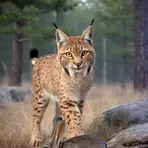
A small wild cat from North America with a short tail and spotted fur
Surface Forms
Morphology
Lynx + rufus
This is a Linnaean binomial: 'Lynx' clearly signals a wild-cat genus so a learner who knows that would infer it names a type of lynx, but 'rufus' is a Latin epithet (not a normal English word; dictionary entry missing) and does not transparently yield the common name 'bobcat'. Thus the phrase gives a partial, predictable clue about taxonomic class but not the specific everyday meaning without prior exposure or knowledge of the Latin epithet.
Etymology
The name Lynx rufus comes from Latin words: Lynx was used for a wild cat known for its very bright, shining eyes, and rufus means 'red', describing its fur. So, the name is a simple description of the bobcat.