

loosestrife
 1
9.9
1
9.9

- noun
- /ˈluːsˌstraɪf/
- Purple loosestrife is a tall, grass-like plant with a bright purple spiky flower that thrives in wetlands.
- purple loosestrife
- control of loosestrife
Examples
-
Although noted for the beauty of its late summer inflorescence, which also provides a nectar and pollen source for bees, loosestrife has few other redeeming qualities and is listed as a noxious weed in 13 states, where its importation and distribution is prohibited.
Academic text (1993) -
Control of purple loosestrife will be achieved more rapidly in mixed plant communities where competition for space and nutrients is greater.
Academic text (1993) -
All species introduced or proposed for introduction will become established throughout the current range of purple loosestrife in North America.
Academic text (1993) -
White butterflies and yellow ones are dancing among the loosestrife.
Fiction book (1997) -
By the 1830s, purple loosestrife was well established along the New England seaboard.
Academic text (1993) -
The wetlands are often filled with vibrant purple loosestrife, attracting various pollinators.
-
In the summer, purple loosestrife blooms beautifully, adding color to the marshy landscapes.
-
Farmers have reported that the invasive purple loosestrife outcompetes native plants for resources.
Synonyms

A type of plant that grows in wet places and often has yellow flowers
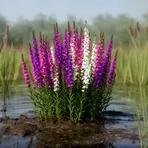
A group of flowering plants with tall spikes of purple, pink, or white flowers that grow in wet places
Compounds


 1
8.9
1
8.9
A tall marsh plant with long purple flower spikes that crowd out native plants
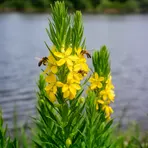

- Specialized
A group of plants like herbs and shrubs that often have pink or purple flowers


A garden plant with curved spikes of white flowers that look like a goose's neck

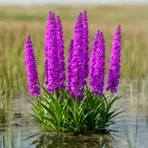

A common North American plant with yellow flowers and leaves that grow in rings around the stem
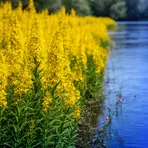
A plant with bright yellow flowers that spreads quickly and often grows near water
Surface Forms
Etymology
The word loosestrife looks like two simple parts, loose and strife, and a helpful way to remember it is to picture a plant that spreads 'loosely' and can cause 'strife' by crowding other plants. So the name fits today because many loosestrifes grow freely in wetlands and can become invasive.