

lodestone
 1
8.8
1
8.8

- noun
- /ˈloʊdˌstoʊn/
- Specialized
- For example, it was thought by some that if lodestone were ground into a plaster and applied to the head, it would cure headaches.
Examples
-
Ancient sailors relied on a lodestone to find their way across the seas.
-
Ancient Greeks, Chinese, and Egyptians were treated with magnetite or lodestone to stimulate the healing process (Oschman, 2000).
Academic text (2005) -
Oh, this here's a lodestone which is a natural magnet.
-
The words invested the lodestone with a spiritual potency equivalent to the drawing power of a magnet.
Fiction book (1991) -
The lodestone and the iron filings—always the same concentric ellipses, the same passions, the same vices.
Fiction book (1994) -
The navigator used a lodestone to help steer the ship in the right direction.
-
In the museum, the lodestone attracted iron filings, demonstrating its magnetic properties.
Synonyms
 180
1.8
180
1.8
A piece of metal that attracts iron or steel
 2
8.3
2
8.3
A black magnetic mineral made of iron and oxygen found in hard rocks

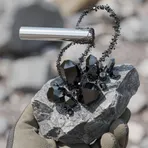
A naturally magnetic stone that attracts pieces of iron
How Magnetic

Surface Forms
Morphology
Etymology
Lodestone comes from old English parts lode meaning 'way' or 'lead' and stone meaning 'stone'. Think of it as a 'leading stone', a rock that 'leads' sailors by attracting iron and helping point the way, which is why lodestones were used for navigation.