

litmus test
- noun
- /ˈlɪt.məs tɛst/
- Specialized
- The students learned how to use a litmus test as part of their chemistry experiment.
Examples
-
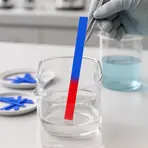
She dipped the litmus test strip into the liquid and watched it turn bright red.
-
The litmus test showed that the solution was acidic.
-
In the laboratory, a litmus test is often used to determine if a solution is acidic or basic.
-
Using a litmus test is a simple way to check pH.
-
The chemist used a litmus test to determine the acidity of the solution.
-
During the experiment, the litmus test changed color, indicating the solution was acidic.
-
To check if the substance was suitable for the experiment, she performed a litmus test.
Synonyms

 8
7.0
8
7.0

A blue dye from lichens that changes color to show if a liquid is acid or base

 1
3.7
1
3.7
Thin paper that changes color to show if a liquid is acid or base

A chemical that changes color to show if a liquid is acidic or basic
Surface Forms
Morphology
The phrase combines 'litmus' (a dye used to indicate acidity) with 'test', so the figurative sense 'a decisive indicator' is a direct, systematic extension of the literal chemical test. For a learner who knows both constituent words, the metaphorical shift is predictable and the meaning is readily inferable.
Etymology
Litmus test comes from a lab strip called litmus, made from lichen, that changes color, turning red in 'acid' and blue in 'basic'. So it was used as a quick 'test' to tell if a liquid was acidic or basic.