
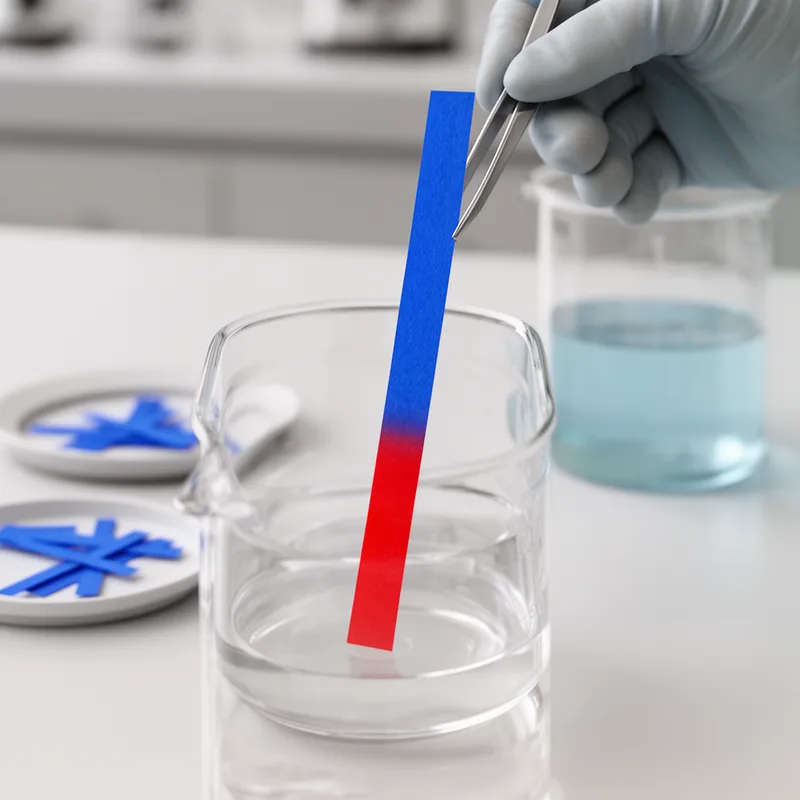
litmus paper


 1
3.7
1
3.7
- noun
- /ˈlɪt.məs ˈpeɪ.pər/
- Specialized
- By dipping the litmus paper into the liquid, we found out whether it was acidic or alkaline.
- litmus paper test
Examples
-
This measurement can be performed either electronically by using a pH controller and chart recorder or manually by using litmus paper and taking a pH measurement every half hour.
Academic text (1998) -
In a chemistry lab, we used litmus paper to determine the acidity of the solution.
-
We have fingerprints and litmus paper.
-
Gee, Mr. Wizard, how do you get the litmus paper to turn blue?
-
He takes the piece of litmus paper from one of the home test boxes and dips it in.
Fiction book (1998) -
The teacher showed us how to test the pH of the water using litmus paper that changes color.
Synonyms
 8
7.0
8
7.0
A blue dye from lichens that changes color to show if a liquid is acid or base
A strip of paper with a chemical that changes colour to show a substance in a liquid

A small paper strip that changes color to show if a liquid is acidic or basic

A chemical that changes color to show if a liquid is acidic or basic
How Sensitive

Surface Forms
Morphology
The meaning is directly compositional: 'litmus' (a dye that tests pH) + 'paper' (thin sheet) straightforwardly yields paper treated with litmus for testing acidity/alkalinity. This regular noun–noun compound follows common English formation and is cross-linguistically familiar, so a B1 learner who knows both constituents can infer the MWE's meaning.
Etymology
Litmus paper is thin paper covered with litmus, a dye that changes color when you dip it into a liquid. Picture a small strip turning red in vinegar or blue in soapy water. That clear color change is the memory hook, so litmus paper is used to tell if something is 'acid' or 'alkaline'.