
lithospheric


 1
8.0
- adjective
- /ˌlɪθəˈsfɪrɪk/
- Specialized
- In this paper, we present the first direct evidence for alkali-carbonate melts in the shallow lithospheric mantle (approximately 110–115 km), above the diamond stability field.
- lithospheric mantle
- lithospheric plates
Examples
-
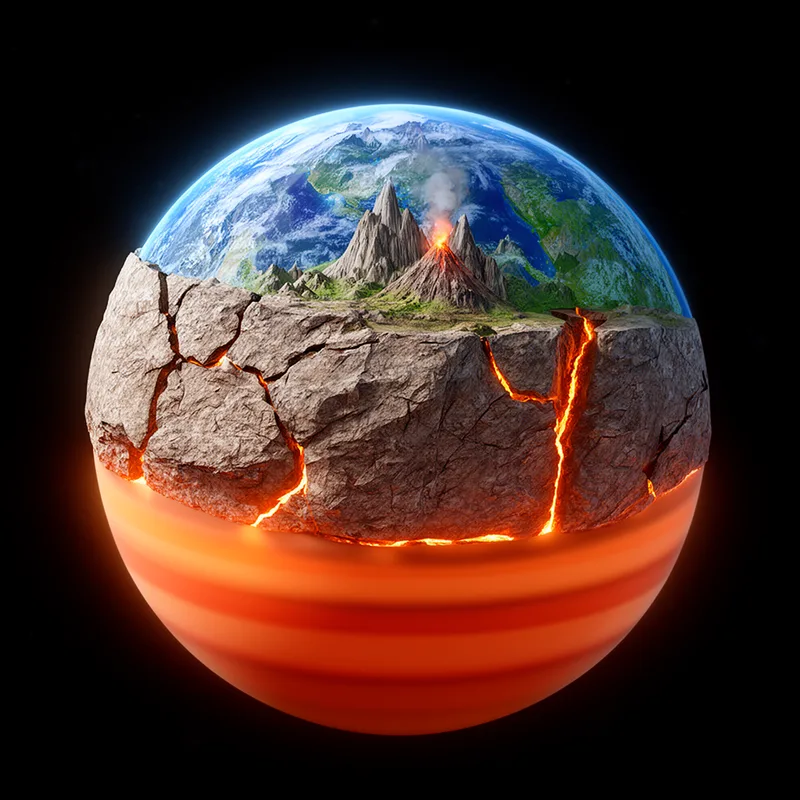
The Earth's lithospheric layer is essential for maintaining the planet's stability and supporting life on its surface.
-
Numerous studies have revealed that the lithospheric mantle underneath the southeast coastal region.
Academic text (2018) -
In geological studies, the movement of lithospheric plates is a key factor in understanding earthquakes and volcanic activity.
-
Research indicates that variations in lithospheric thickness can significantly affect land formation and tectonic processes.
Surface Forms
Morphology
lithospheric = lithosphere (transparent) = lithosphere + ic
The adjective is formed by the regular addition of '-ic' to 'lithosphere', so its meaning is directly 'relating to the lithosphere'.
Etymology
The word lithospheric comes from Greek parts litho- meaning 'stone' and sphere meaning 'ball' or 'globe'. So lithospheric describes the hard, rocky 'shell' around a planet, which is why it means the Earth's rigid outer layer.