
liquidus
- noun
- /ˈlɪkwɪdəs/
- Specialized
- We're looking at this is the liquidus here, liquidus line, and this is the solidus line.
- liquidus temperature
Examples
-
Granitic magmas emplaced into the shallow crust typically have liquidus temperatures around 900°C.
Academic text (2018) -
That is the region between the solidus and the liquidus, where the material exists as a molten mixture of solid alloy, according to Raymond Decker, the president of Thixomat Inc. of Ann Arbor, Mich.
Academic text (1999) -
OK, so liquidus equilibrium and the liquidus is liquidus is the lowest temperature.
-
For large degrees of undercooling (defined as the difference between the equilibrium liquidus temperature and ambient temperature in a solidifying system), microstructures result entirely from reaction (i.e., crystal growth).
Academic text (2018) -
Granitic magmas typically have a liquidus temperature of around 900°C, indicating when they become entirely liquid.
-
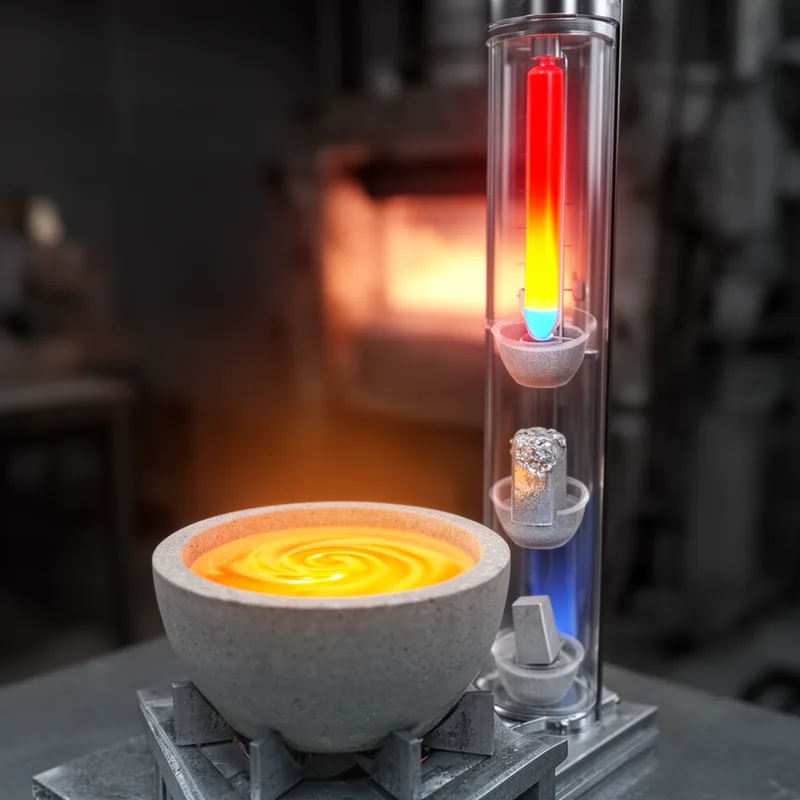
In the phase diagram, the liquidus line shows the temperatures at which a substance is completely liquid.
-
The temperature at which the liquidus is reached determines the specific processing conditions for various alloys.
Synonyms
 4
2.9

The temperature when a solid becomes a liquid
Surface Forms
Etymology
Liquidus as a noun names the temperature or line on a chart where a material becomes fully liquid. It comes from the Latin liquidus, meaning 'liquid', so think of the liquidus as the point where everything has turned to liquid.