
melting point
 3
2.9
3
2.9

- noun
- /ˈmɛltɪŋ pɔɪnt/
- Specialized
- An alloy of lead and bismuth had also been considered as a coolant because it has a lower melting point than pure lead.
- low melting point
- melting point temperature
- exceeds the melting point
Loading YouTube…
Watch on YouTubeAnd that means that you reduce the melting point by doing that imbalance towards Indium.
- And that means that you reduce the melting point by doing that imbalance towards Indium.
- They all become, in a sense, one substance that has one melting point, which is why you have to kind of take some steps to separate them.
- Sulphur exploiting the fact that sulphur has a low melting point.
Examples
-
However, the melting point of gamma ranged from 1360 Celsius to 1450 Celsius according to previous studies.
Academic text (2000) -
The soft metal gallium has such a low melting point that it will liquefy on contact with your hand.
Academic text (2002) -
The air in it is several degrees above the melting point of ice.
Fiction book (2002) -
Another unusual and related property of ice is that, for a given temperature, increasing the pressure decreases the melting point.
Academic text (2007) -
And getting back to sea level and glaciers, the melting point of ice is a number.
-
The substrate is held above the melting point of the metal.
Academic text (1996) -
Because coconut oil has a low melting point, the beeswax will give it some solid form.
Blog text (4) -
The soft metal gallium has such a low melting point that it will liquefy on contact with your hand.
-
Lead solder is hard to duplicate because it has a relatively low melting point of about 180 degrees.
-
Yellow brass has a melting point of 905 degrees Celsius.
Antonyms

- Specialized
1
2.8
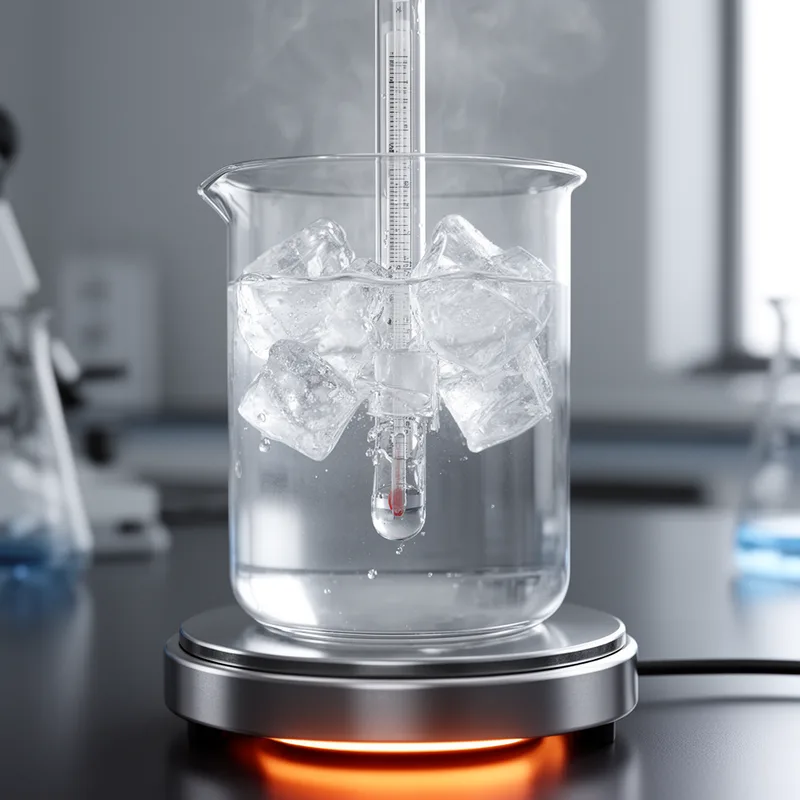
The temperature at which a liquid becomes solid at normal air pressure
Surface Forms
Morphology
The primary sense 'the temperature at which a solid becomes liquid' is transparently composed from 'melting' (becoming liquid) + 'point' (a specific temperature/stage), so a B1 learner who knows both words can readily infer the meaning. The metaphorical use ('a critical moment') is a predictable extension of the literal sense and remains reasonably inferable from the constituents and cross-linguistic equivalents (e.g., Spanish 'punto de fusión'), supporting a transparent rating.
Etymology
Melting point: The noun melting point comes from the simple image of heat making a solid change to 'liquid'. It is the exact point when melting begins, so the term means the temperature where a solid becomes 'liquid'.