

lingua
- noun
- /ˈlɪŋɡwə/
- Specialized
- The presenter emphasized the importance of the lingua in various animals for their feeding habits.
- lingua franca
Examples
-
The assumption was that Google was out to fix what's wrong with that powerful lingua franca of the Web.
Blog text (24) -
Is that a distended externus lingua... or are you just happy to see me?
Fiction book (1997) -
For Erasmus on music, see "De Lingua," in CWE, vol. 29, 466.
Academic text (2011) -
For the first time, Focus.de (German news agencies field) is reporting Hamas holding 22 foreign correspondents in place (diplomatic lingua without allowing them to leave).
Blog text (17) -
In his own voice, Mitchell expounds on this latest phase: "Linguistics, semiotics, rhetoric, and various models of 'textuality' have become the lingua franca for critical reflections on the arts, the media, and the cultural forms."
Academic text (1995) -
The "media cycle" is certainly in evidence in Britain and America today; see Robert S. Boynton, "The Routledge Revolution: The Rise of the Academic Left's In-House Publisher," Lingua Franca, vol. 3, 1995, 25-31.
Academic text (1995) -
The veterinarian examined the dog's lingua to check for any signs of infection.
-
During the examination, the doctor asked the patient to stick out their lingua for an oral assessment.
Synonyms

 601
1.0
601
1.0

A soft movable part in the mouth used for tasting, eating, and speaking


 1
9.9
1
9.9
A part made of muscle in the mouth of animals or humans that helps you taste and speak

The tongue used to speak

The tongue of an animal eaten as food
Compounds



- Specialized
A fern from East Asia with long tongue-shaped leaves often grown as a houseplant
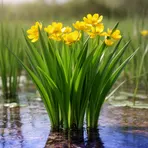
- Specialized
A plant that grows in wetlands with long pointed leaves and yellow buttercup flowers
Surface Forms
Etymology
Lingua comes from the Latin word lingua meaning 'tongue', the soft moving part in your mouth. The same root gave us English words like language and linguistics, so lingua can still mean the actual tongue.