

ligament
 37
4.4
37
4.4

- noun
- /ˈlɪɡəmənt/
- Specialized
- After his surgery, the doctor explained that he needed to rehabilitate the ligaments in his knee to regain full mobility.
- torn ligament
- knee ligament
- cruciate ligament
Loading YouTube…
Watch on YouTubeSo your muscles clearly can get stronger, but even your ligaments and tendons can get stronger.
- So your muscles clearly can get stronger, but even your ligaments and tendons can get stronger.
- Just let go and watch knowing that it isn't dangerous, your ligaments are all fine and nothing is broken.
- They are connective tissue like tendons and ligaments.
- I had shooting pains for a long time, but I always thought it was ligaments and tendons that I'd strained earlier.
- Between your tooth and your jawbone, there is a specialized piece of tissue called the periodontal ligament, or PDL for short.
- For instance, anterior crucial ligament injuries in soccer players or other cutting type sports.
- That is, of course the ligaments and tendons are involved in the movements and but do ligaments and tendons themselves grow and or get stronger?
- So for example, an athlete, if they couldn't resist their knee being pried apart, they're let they're at more risk of a ligament tear.
- So again, AGOSCU, that's going to help retrain the muscles, but prolotherapy and PRP will help retrain the ligaments and the tendons.
- I also tore some of the smaller ligaments in the kneecap itself, as our doctor here, who's a sports medicine guy was able to figure out looking at it.
- He's like pulling on my, like ligaments and tendons and stuff, messing with stuff.
Examples
-
But I partially tore my PCL ligament in my knee.
-
But you have some deep bruising in your left thigh and some torn ligaments in your left wrist.
-
The impact tore every ligament in his foot.
-
Now, his ligaments are gone, which will probably mean he'll be out for, like, three months.
-
When you slouch, you stretch out the ligaments over time.
-
I think he's torn his ligaments.
-
Nordic walking may allow an increase in activity by reducing the strain on the knee ligaments.
Academic text (2012) -
Because of the tensile strength of ligaments, they can withstand great load-bearing.
Academic text (2002) -
I also tore some of the smaller ligaments in the kneecap itself, as our doctor here, who's a sports medicine guy was able to figure out looking at it.
-
The athlete was advised to strengthen the ligaments in his ankle to prevent future injuries.
Synonyms

A band of tissue that connects bones or supports organs

A band of tissue that connects bones
Compounds

A band of tissue that connects two bones and gets torn or stretched in a joint like the knee

- Specialized
A thin curved band that connects the liver to the breathing muscle and front of the belly
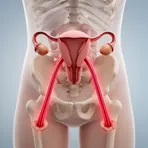
- Specialized
A cord of tissue on each side of the womb that runs to the outer female genital area
Surface Forms
Morphology
ligament = lig + ment
Although the form can be analysed as the combining form 'lig-' + the noun-forming suffix '-ment', the combining form 'lig-' is not a standalone English word and the formation is Latin-derived, so an average B1 learner cannot derive the anatomical meaning from familiar English components.
Etymology
Ligament comes from the Latin root ligare, which means 'to bind'. Think of a ligament as a strong band that 'binds' bones to each other and helps keep a joint stable.