
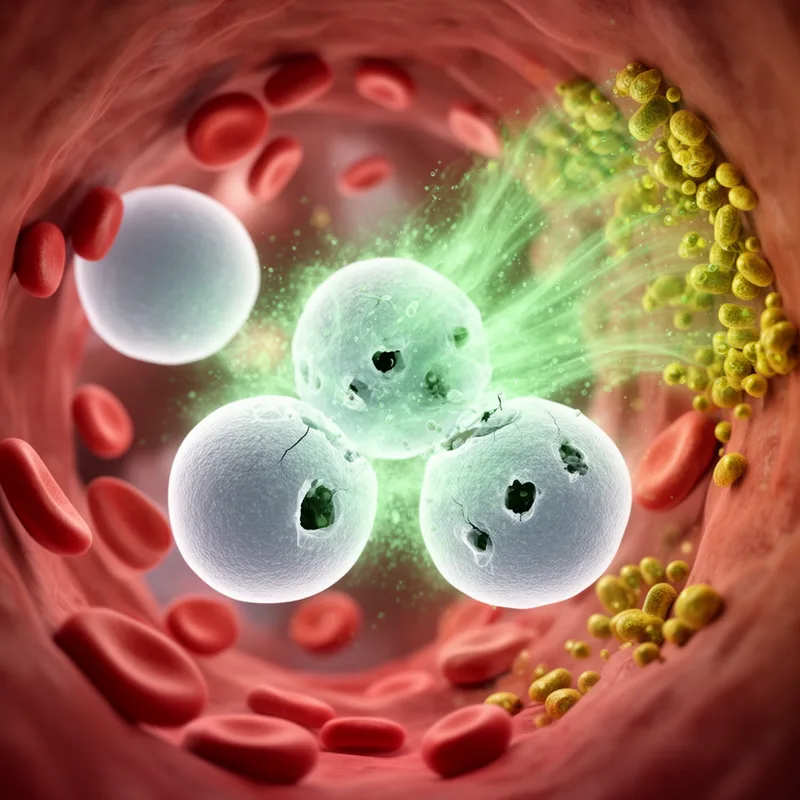
leukocidin


 1
9.9
- noun
- /ˌluːkəˈsaɪdɪn/
- Specialized
- Researchers studied how leukocidin attacks and destroys white blood cells in the body.
Examples
-
The presence of leukocidin can lead to more severe symptoms in bacterial infections.
-
The bacteria produce leukocidin to evade the immune response.
-
Some strains of Staphylococcus bacteria produce leukocidin, making infections more dangerous.
-
Research shows that leukocidin can be lethal to white blood cells.
-
The bacterium produces leukocidin, which attacks and destroys the body's white blood cells.
-
During the infection, leukocidin weakens the immune response by eliminating vital white blood cells.
-
Researchers found that the presence of leukocidin in certain strains of bacteria increases the risk of severe illness.
Surface Forms
Morphology
leukocidin = leukocyte (opaque) = leuko + cidin
Although built from the combining form 'leuko-' and the bound element '-cidin', these are specialized medical elements unfamiliar to average learners, so the immediate derivation is not recoverable for most.
Etymology
The word leukocidin comes from Greek leuko- meaning 'white' and the ending -cidin meaning 'to kill', like in pesticide which kills pests. So leukocidin is a poison made by bacteria that kills white blood cells, which is what the word means today.