
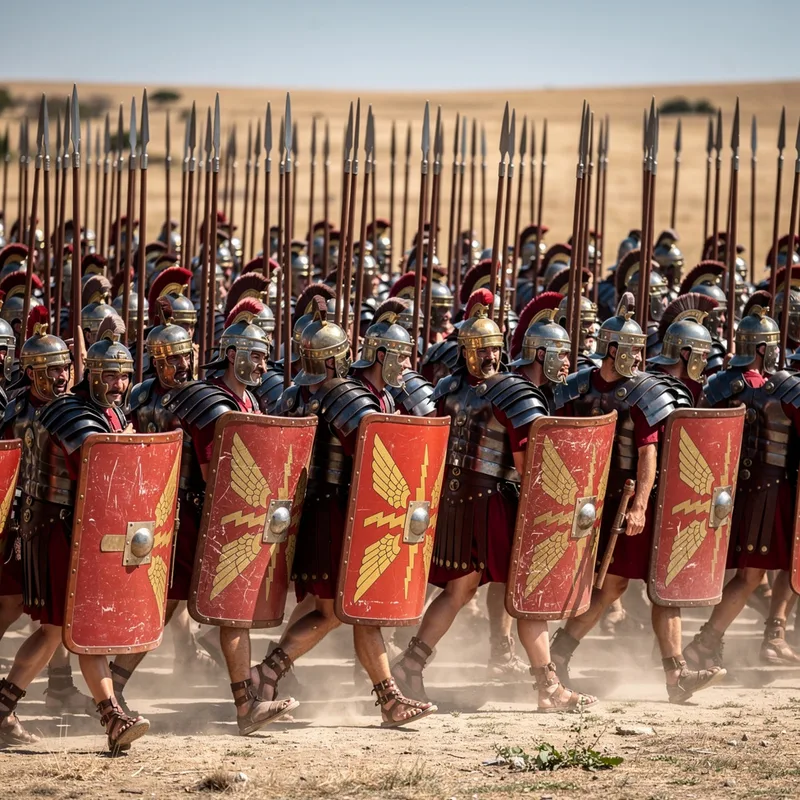
legion
 40
6.7
40
6.7

- noun
- /ˈliːdʒən/
- In ancient Rome, a legion typically consisted of thousands of soldiers.
- a Roman legion
- a foreign legion
Loading YouTube…
Watch on YouTubeOne was Mary Brown, who was a Spanish who was actually in the in the French Legion.
- One was Mary Brown, who was a Spanish who was actually in the in the French Legion.
- The auxiliaries in the Roman army were the people who weren't part of the legions but fought on the side of it and, you know, helped out.
- I think the three legions he sent to Nena will be in for quite a surprise when they find that half of Hell's armies are still there waiting for them.
- He takes up drinking and joins the Klatchian Foreign Legion.
Examples
-
I'm looking for the Ninth Legion of the Roman Army.
-
The Conqueror leads her legions to victory in a war against forces led by her brother.
Blog text (18) -
But why would they not dispatch a legion to best us?
-
"Ever heard of the Arab Legion?" The youth was silent.
Fiction book (1994) -
Break it, and no Roman legion, papal army, nor God himself will protect you.
-
All right, then, uh, we'll do it like the Roman legions.
-
Our victory at hand, I commanded a legion of troops to take the capital city.
-
Today, let's explore the true size of a legion of the Roman Empire.
-
Soon after that, Antony's legion stopped their resistance and defected.
-
Back on the battlefield, the victorious legions hailed Antony as imperator.
Synonyms
 1
8.1
1
8.1
A group of about 3,000 to 6,000 soldiers in ancient Rome
Compounds
 11
3.5
11
3.5
A large U.S. group of military veterans who support each other and promote national pride



 1
6.7
1
6.7
A military unit of volunteers from other countries who serve in a country's army
How Big

Surface Forms
Etymology
The word legion comes from the Latin legio, from legere meaning 'to gather'. In ancient Rome a legion was a large group of soldiers gathered together, which is why the word means a big military unit.