
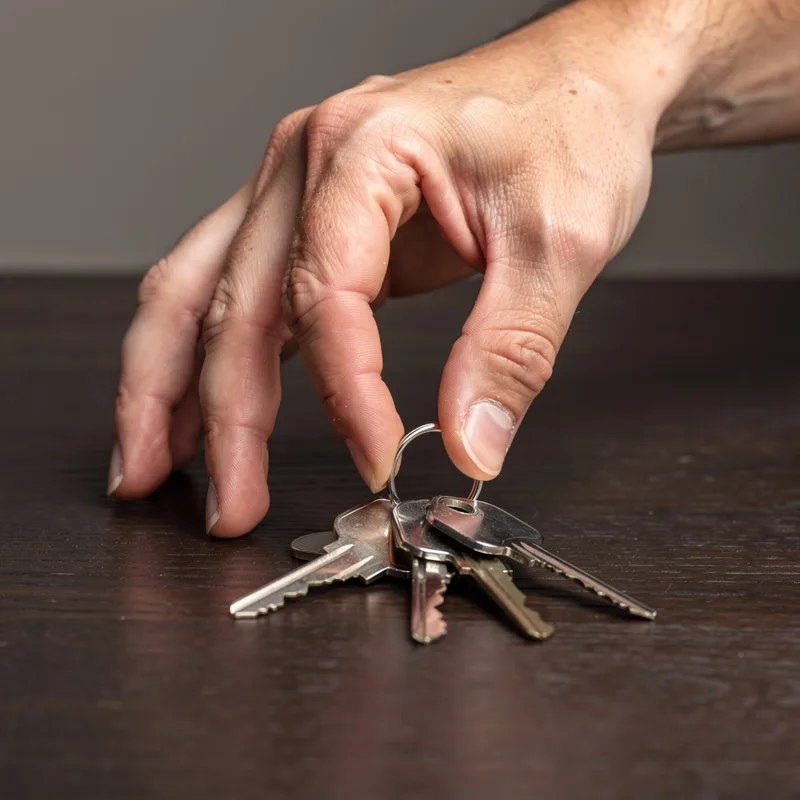
to lay hands on
 1
4.6
1
4.6

- phrasal verb
- /leɪ hændz ɒn/
- This is the first time that I have ever laid hands on a water cooled MXM card.
- lay hands on the thief
Loading YouTube…
Watch on YouTubeAnd last year, multiple times, I had people lay hands on me, anoint me with oil.
- And last year, multiple times, I had people lay hands on me, anoint me with oil.
- It could be the day that their anger and rage continue to escalate and they finally lay hands on you or physically threaten you.
- This is some random person that this guy has found on the street, and now the police are laying hands on this guy.
Examples
-
And the pastor stepped up to Naomi, laid hands on her head, and started to pray loudly for healing and for Michael's spirit to leave the living and find peace.
Fiction book (2002) -
Yes, he laid hands on my little girl, yes.
-
And last year, multiple times, I had people lay hands on me, anoint me with oil.
-
It is not our wish to lay hands on your kingdoms.
Academic text (1999) -
It could be the day that their anger and rage continue to escalate and they finally lay hands on you or physically threaten you.
-
It could be the day that their anger and rage continue to escalate and they finally lay hands on you or physically threaten you.
-
When she bent down to lay hands on a second set of rocks, I’d had a bellyful.
Fiction book (2002) -
Whoever laid hands on Ivan could rule Markovy in the boy's name, undisputed so long as Aria was childless.
Fiction book (2002) -
They shall take up serpents; and if they drink any deadly thing, it shall not hurt them; they shall lay hands on the sick, and they shall recover" (Mark 16:15-18).
Blog text (21) -
The healer asked the volunteers to lay hands on the patients during the ceremony to provide comfort.
Synonyms
 ∞
1.0
∞
1.0
To carry or support something with your hands
 ∞
1.0
∞
1.0
To put your hand or body on something to feel it
 328
1.0
328
1.0
Touch or hold something with your hands, often carefully
 21
3.1
21
3.1
Grab something or someone with your hands
 15
2.0
15
2.0
To grasp something with your hands
Antonyms

How Firm

Surface Forms
Morphology
The literal sense of 'lay' + 'hands' + 'on' (to place one's hands on something) evokes grasping or getting hold of an item, so learners can partly infer a sense of obtaining. However, the idiomatic extension to 'acquire or obtain (often with difficulty)' is a metaphorical shift and not fully predictable from the parts without prior exposure.
Etymology
Lay hands on comes from the plain image of putting your hands onto a person or thing to touch, check, or hold it; people once used the phrase when they literally placed their hands on something. So it now means 'to touch, handle, or take hold of'.