
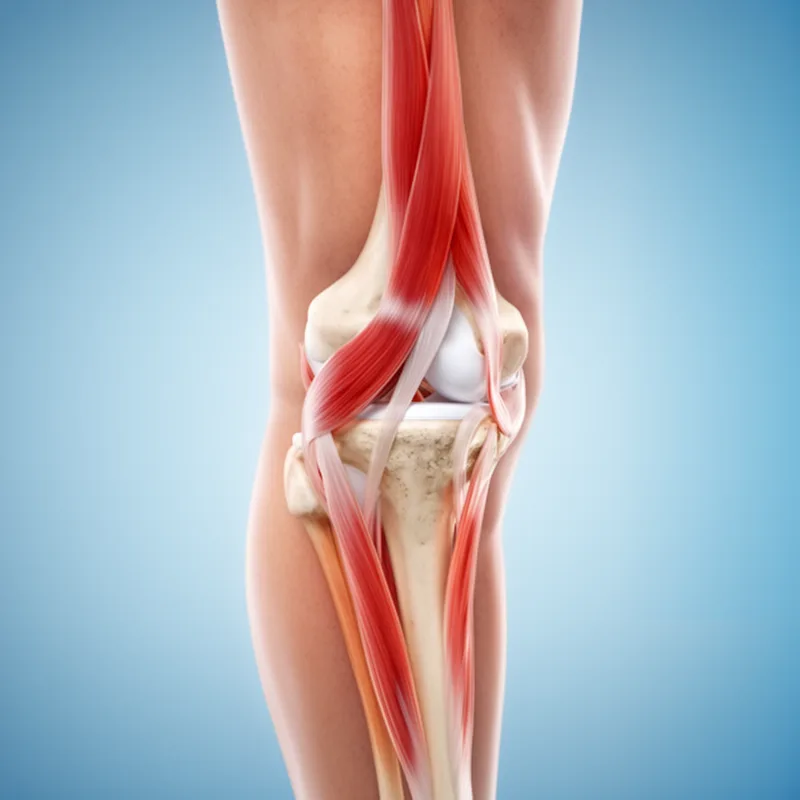
laxity


 1
8.2
1
8.2
- noun
- /ˈlæksɪti/
- Specialized
- Obesity and/or a sedentary lifestyle lead to muscle weakness and ligament laxity.
- ligamentous laxity
- joint laxity
- ligament laxity
Examples
-
At the 2-year follow-up, there was no difference between the two groups in the increase of anterior knee laxity relative to the baseline values that were obtained immediately after surgery.
Academic text (2005) -
In addition, neonatal and infant feet have a much greater range of motion than the adult foot, and joint laxity is quite common.
Academic text (2005) -
Young patients with little laxity may benefit from other methods of reconstruction because this technique may produce inadequate aesthetic results.
Academic text (2012) -
Although mild, asymptomatic laxity of the ACL is quite common following this injury.
Academic text (2006) -
However, other risk factors, such as joint laxity, hormonal influences, limb alignment, notch dimensions, and ligament size, may not be modifiable.
Academic text (2005) -
The hypothesis is that there would be no difference in anterior-posterior laxity of the reconstructed knees for patients treated with accelerated rehabilitation in comparison to those treated with non-accelerated rehabilitation.
Academic text (2005) -
Fatigue, an extrinsic factor, affects the musculoskeletal and neurologic systems and is associated with decreased knee proprioception and increased joint laxity.
Academic text (2005) -
The vast majority of these fractures occur in the first decade of life because of the increased incidence of falls, generalized ligamentous laxity, and weakness in the bony architecture at the supracondylar area of the humerus.
Academic text (2006) -
Finally, children who are most frequently affected by Grisel's syndrome have a known preexisting laxity of the stabilizing ligaments of C1 and C2, specifically the transverse ligament.
Academic text (2004) -
As you age, the increased laxity of your skin can cause wrinkles and sagging.
Synonyms
 1
5.0
1
5.0
Soft, loose parts of the body or muscles that are not firm
 1
2.5
1
2.5
A small gap or movement between parts that should be tight

Looseness in muscles or joints that makes movement feel weak

A state when something is loose rather than tight

A calm, comfortable state with little worry or stress
Antonyms

How Firm
- Specialized
3
6.0
 3
2.4
3
2.4
- Specialized
8
3.4
- Specialized
1
8.2
1
9.6
Surface Forms
Morphology
Etymology
The word laxity comes from the Latin word laxus, which means 'loose', and you can see the same root in English lax and relax. So when doctors talk about laxity of muscles or ligaments, they mean those parts are too 'loose' or not tight.