
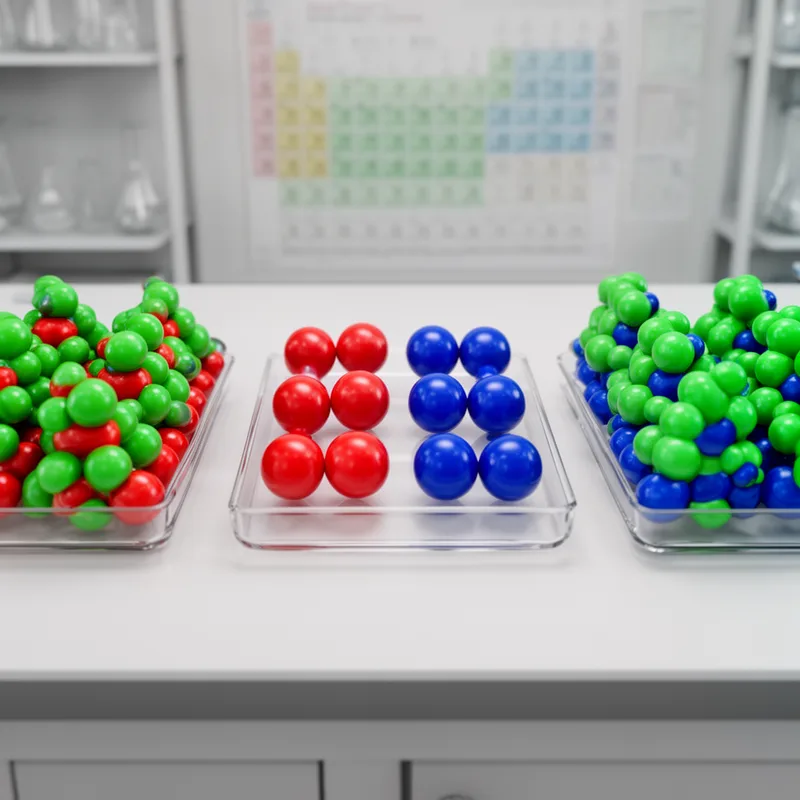
law of reciprocal proportions
- noun
- /lɔː ʌv rɪˈsɪprəkl pərˈpɔrʃənz/
- Specialized
- In the nineteenth century, the law of reciprocal proportions played a key role in developing atomic theory.
Examples
-
The law of reciprocal proportions helps chemists understand how elements interact when forming compounds.
-
Students were asked to explain the law of reciprocal proportions using examples of chemical reactions.
-
The law of reciprocal proportions is fundamental in understanding chemical reactions.
-
Have you studied the law of reciprocal proportions in your chemistry class?
-
Chemists often use the law of reciprocal proportions to predict the outcomes of chemical reactions between elements.
-
In advanced chemistry courses, students learn about the law of reciprocal proportions and how it applies to different compounds.
-
Understanding the law of reciprocal proportions is essential for students studying chemical bonding and ratios.
Synonyms
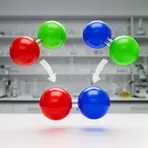
When two elements each combine with the same third element, they combine with each other in the same amounts
Surface Forms
Morphology
law + of + reciprocal + proportion
The parts 'law' + 'reciprocal' + 'proportions' signal a scientific rule about inverse or reciprocal ratios, so a learner who knows the constituent words could infer a vague idea that it concerns proportions that are reciprocals. However, the specific chemical formulation (how elements combine with a fixed mass of a third element and the exact ratio relationships) is technical and not fully derivable from the words alone, requiring domain knowledge.
Etymology
Law of reciprocal proportions comes from early chemists who measured how much one element would 'combine' with a fixed amount of another. Think of a balance scale: if A pairs with B in one amount and C pairs with B in another, the amounts that A and C use with each other turn out to be 'simple multiples' of each other. That's why the law explains why element amounts in compounds are regular and easy to predict.

