
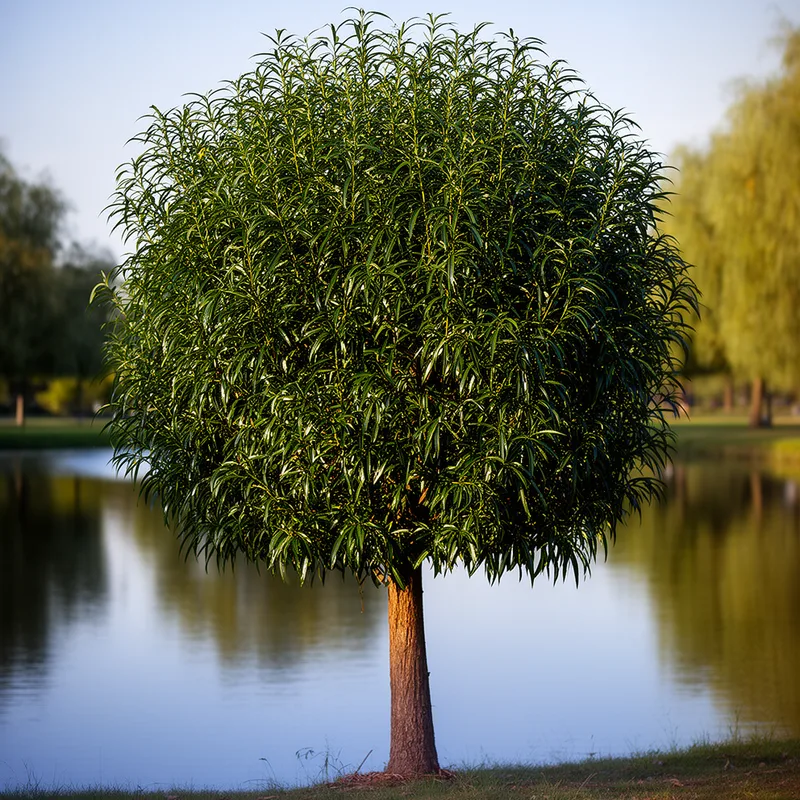
laurel willow
- noun
- /ˈlɔːrəl ˈwɪloʊ/
- We planted a laurel willow by the pond to attract more wildlife.
Examples
-
The park was lined with laurel willow, providing cool shade in the summer.
-
The laurel willow is known for its beautiful foliage.
-
Botanists have studied how the laurel willow adapts to environments outside its native Europe.
-
Many gardeners prefer the laurel willow for landscaping.
-
The park was lined with laurel willow, providing cool shade in the summer.
-
We planted a laurel willow by the pond to attract more wildlife.
-
Many gardeners prefer the laurel willow for landscaping.
Synonyms
A willow tree from Europe with shiny thick leaves often grown in gardens

A willow tree with shiny tough leaves that grows in wet places
Surface Forms
Morphology
The compound is a straightforward modifier + head noun: 'laurel' describes a quality or likeness and 'willow' names the tree, so the phrase denotes a willow with laurel-like leaves. This compositional pattern is common and cross-linguistically transparent, so a B1 learner who knows both constituents can infer the meaning.
Etymology
Laurel willow comes from how this willow has leaves that look like a laurel: shiny, thick and long. So today laurel willow means 'a willow tree with laurel-like leaves'.

