

latter
 258
2.1
258
2.1

- adjective
- /ˈlætər/
- During the meeting, we focused on the latter topics, which included budget allocation and project deadlines.
- the latter half
- the latter part
- the latter years
Loading YouTube…
Watch on YouTubeHe says it knows the latter objective being to be its own self.
- He says it knows the latter objective being to be its own self.
- As we move into the latter part of this class.
- So he's, I think he was, he was the latter end of his career.
- And how are they going about the latter part?
- So it also influences when you start to feel sleepy in the latter end of the day.
- So that's one theme that's going to come back several times in the latter part of the course.
- So is the object being determined thus for consciousness, the latter consciousness possesses reason.
- And in my case, part of the latter category for a reason, the ending.
- And to your point, yes, I towards the latter half of high school was getting quite baked.
- And the official term for the just talking about things is rhetoric, the latter dialectic.
- Well, OK, before we get, we'll cover your nonprofit and company in the latter portion of this.
Examples
-
So that's one theme that's going to come back several times in the latter part of the course.
-
So this slide is for the latter group of people.
-
As we move into the latter part of this class.
-
In my opinion, it's the latter, the second part.
-
In recent years, there has been increasing support for the latter view.
Academic text (2011) -
You seem to prefer the latter.
-
In the late 1980s, in the latter years of the "Sputnik era," a new stage of education emerged.
Academic text (2011) -
In the discussion about the two proposals, I found the latter to be more convincing.
-
The students who excelled in the first exam struggled in the latter part of the semester.
Antonyms

Compounds
 19
5.2
19
5.2
A person who belongs to the Church of Jesus Christ of Latter-day Saints, often called the Mormon Church
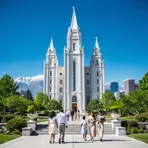
A Christian church started in 1830 by Joseph Smith, based in Salt Lake City
Surface Forms
Morphology
Etymology
Latter is related to later and late, from an old English root meaning 'coming after'. That's why latter describes the 'second' or the 'last' item mentioned when comparing things.