

to languish
 32
7.2
32
7.2

- verb
- /ˈlæŋɡwɪʃ/
- So Ukraine was languishing under these conditions, as were as were other places.
- languish in prison
- continue to languish
- languished for a decade
Loading YouTube…
Watch on YouTubeAnd for a while that bill had languished without a Republican Co sponsor.
- And for a while that bill had languished without a Republican Co sponsor.
- And then the people of Gaza will be left in that concentration camp to languish and die.
- And that is actually making me feel a little like I'm languishing in here.
- So Ukraine was languishing under these conditions, as were as were other places.
- This is why so many people soon after they retire not only disappear, but die or languish.
- Are they still there after years and kinds of languishing?
Examples
-
And some of these kids can often languish in the system, unless a wonderful family like yours steps up for them.
-
Sadat's treaty with the Israelis soon languished, resulting in a cold peace after his assassination.
Academic text (2011) -
"So in the end, my father will languish, who knows for how long, with no words?"
Fiction book (2001) -
Thus, much of Africa continued to languish, and poverty in South Asia remained widespread.
Academic text (2001) -
Why are a significant number of teachers left to languish professionally for periods of three or more years?
Academic text (1991) -
Many of the agricultural settlements would languish or go out of existence.
Academic text (1996) -
All the members of Tong languish in poverty.
-
Laurent Kabila began his rebellion in the 1960s, but it languished for decades.
Academic text (2003) -
America's urban secondary systems, with their flagship academic magnets and their languishing neighborhood high schools, show comparable results.
Academic text (1992) -
The students began to languish in their studies due to a lack of motivation and support.
Synonyms
 531
1.2
531
1.2
To slowly become less visible, bright, or loud
 143
5.1
143
5.1
To become thin and weak because of illness or a lack of food
 91
4.4
91
4.4
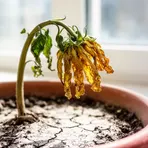
To become dry and weak, as with plants or feelings
 7
5.5
7
5.5
To become weak and thin because of sickness or not eating enough
 4
8.3
4
8.3
Become weak and thin because you miss someone or something
Antonyms


How Weak

Surface Forms
Etymology
Languish comes from the old Latin verb languēre, which means 'to be weak' or 'faint' and is the same root as languid. So when a person or plant languishes, they lose strength or fade from neglect or sorrow.