

labial


 1
8.2
1
8.2
- noun
- /ˈleɪbiəl/
- Specialized
- OK, so you know, so I I have these nasal, nasal labial folds.
Examples
-
"He had trouble enunciating the labials."
Fiction book (2000) -
Second, metathesis of the labials with the semivowel was regular in Portuguese, in contrast to its restriction to only two verb stems in Spanish.
Academic text (2002) -
The appearance of one or more scales between the eye and upper labials distinguishes this species from other water snakes.
Blog text (12) -
These are summarized in Table 1 and are illustrated for two words (one labial, one nonlabial) in Figure 1.
Academic text (2013) -
It is evident that Kernan is having more difficulty with the labials than with the apical and dorsal consonants.
Academic text (1991) -
The teacher emphasized the need for clear pronunciation of the labial consonants in class.
-
During our speech therapy sessions, we focus on producing labials correctly to improve articulation.
-
In phonetics, labials are crucial for understanding how certain sounds are formed using the lips.
Synonyms

A sound you make with your lips, like p, b, and m
Compounds

- Specialized
Blood vessels that carry blood away from the front outer lips of the female genitals
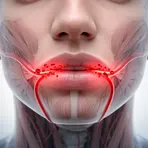

- Specialized
A small jointed part at the front of an insect's mouth that helps taste and handle food


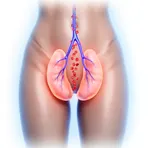
- Specialized
A tube that carries blood away from the outer lips of the female private parts
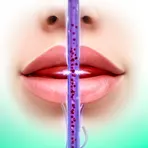
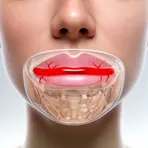
- Specialized
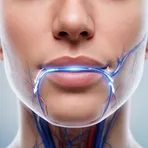
A small blood vessel that carries blood from the lower lip to a vein in the face

- Specialized
A blood vessel behind the labia majora that carries blood to the internal pudendal vein


How Labial

Surface Forms
Etymology
Labial comes from the Latin word labium, meaning 'lip'. As a noun, a labial is a consonant made by touching or moving the lips, for example 'p' and 'b', so it literally names a 'lip' sound.