
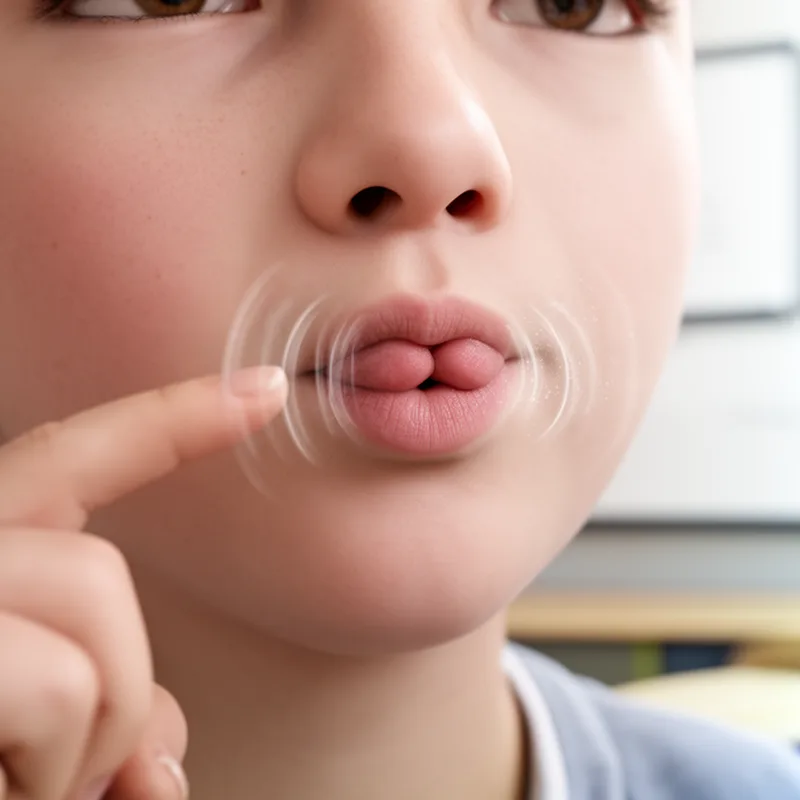
labial
- adjective
- /ˈleɪbiəl/
- Specialized
- Practicing labial sounds is important for improving pronunciation in speech therapy.
- labial consonants
- labial sounds
- labial context
Examples
-
Values were higher in labial contexts and in boys (see Figure 4).
Academic text (2013) -
The finding of lower FreqM in labial contexts can be interpreted as a result of longer front cavities and/or smaller lip openings (Heinz & Stevens, 1961).
Academic text (2013) -
The superior labial artery reaches the anterior septum from the upper lip.
Academic text (2007) -
An additional constraint, critical for tracking lip and jaw movement, was that the words included initial and medial labial consonants.
Academic text (2011) -
Because a labial context tends to lower the frequency of the main peak, the energy in the mid-frequency band will tend to increase, leading to a higher LevelDM-H value.
Academic text (2013) -
Temporal variation in the mid-frequency peak differentiated labial contexts while normalizing over gender.
Academic text (2013) -
In this example, the f preserves the continuity of the /s/ as well as the labial place specification of the /p/ (Chin & Dinnsen, 1992; Pater & Barlow, 2003).
Academic text (2015) -
The sound /p/ is a labial consonant made by closing the lips.
-
In phonetics, labial refers to sounds produced by the lips, such as /b/ and /m/.
Compounds

- Specialized
Blood vessels that carry blood away from the front outer lips of the female genitals



- Specialized
A small jointed part at the front of an insect's mouth that helps taste and handle food


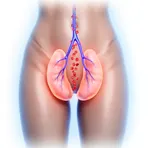
- Specialized
A tube that carries blood away from the outer lips of the female private parts
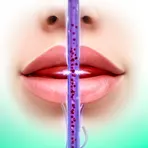

- Specialized
A small blood vessel that carries blood from the lower lip to a vein in the face

- Specialized
A blood vessel behind the labia majora that carries blood to the internal pudendal vein


How Labial
- Specialized

- Specialized
Surface Forms
Morphology
Etymology
Labial comes from the Latin word labium, meaning 'lip'. In speech, a labial sound is one you make with your lips, like the English 'p' or 'b', so labial means 'made with the lips'.

