
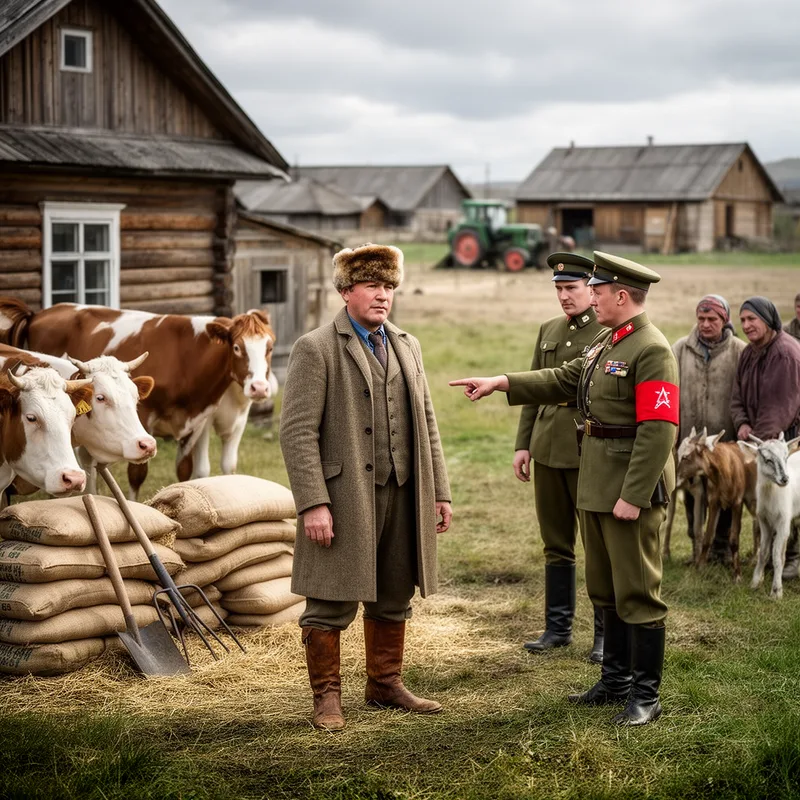
kulak
 1
9.9
1
9.9

- noun
- /ˈkuˌlɑk/
- Archaic
 :
kulak
:
kulak
- Stalin's murder of the kulaks, for instance: five million Ukrainian peasants killed because Stalin wanted to collectivize agriculture.
Are you familiar with the kulaks from Russia?
- Are you familiar with the kulaks from Russia?
- And they they killed what were called the kulaks.
- So in in Ukraine especially, but in the Soviet Union, there's the kulaks.
- And a kulak, the real meaning or the literal meaning is kind of this wealthy landowner, right?
Examples
-
There were no kulaks to prosper on the bread of poverty, which the peasants extracted from the frozen land.
Fiction book (1993) -
Had he been aware of the Soviet Union's brutal treatment of kulaks during its collectivization process, it is possible he would have changed his mind.
Blog text (32) -
Are you familiar with the kulaks from Russia?
-
And then, as if alarmed at his own words: "The kulaks have only themselves to blame."
Fiction book (1993) -
To hint at the fate of the kulaks took real boldness.
Fiction book (1993) -
Trains took my grandfather, a "kulak," into exile, my father, an intellectual, to the camps, and my brother, a rebel, to distant provinces.
Fiction book (1996) -
But the thirties showed the real state of things: the depression, the new democracies falling to fascism, the brutal Spanish Civil War, the starvation of the kulaks, and the terrible sense of fatality in the air.
Fiction book (1991) -
Then, using their mass media monopoly, the rabid propaganda campaign against the kulaks (well-to-do farmers) and the peasants was initiated, accusing them of allegedly creating the famine.
Blog text (26) -
During the Soviet era, many wealthy farmers, known as kulaks, were persecuted for resisting collectivization.
-
The harsh policies of the Soviet government particularly targeted kulaks, who were often seen as enemies of the state.
Synonyms

A rich farmer who wants private farms instead of shared farms
Compounds
How Wealthy

Surface Forms
Etymology
Kulak comes from Russian and literally means 'fist'. Because a 'fist' suggests holding on tight, the word came to mean a wealthier peasant who kept grain and land, and that's why it became the name for those targeted when the Soviet government took land and farms.