
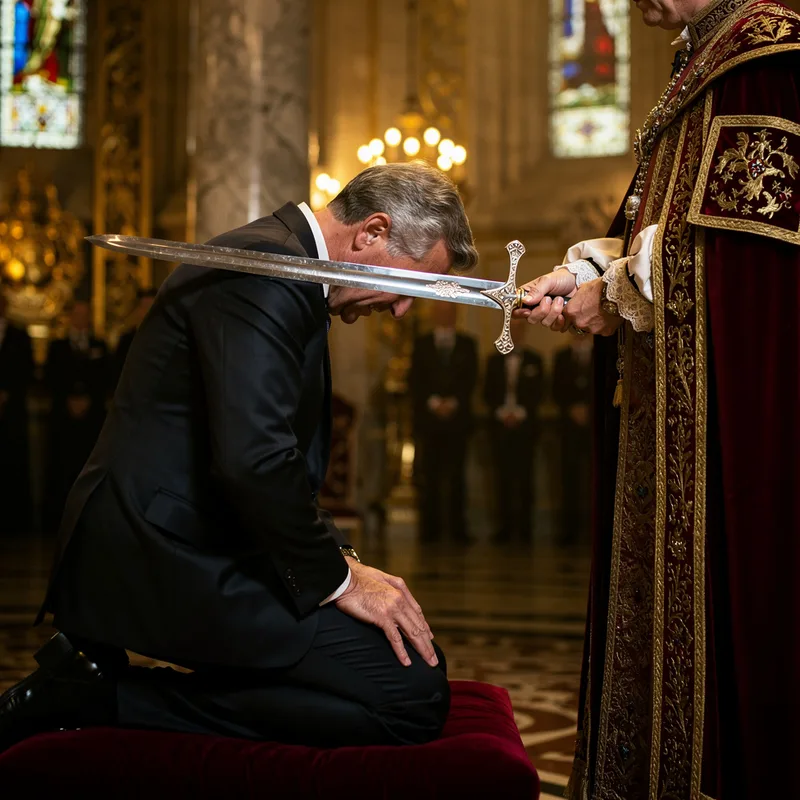
knighthood
 9
7.4
9
7.4

- noun
- /ˈnaɪtˌhʊd/
- Formal
- "Sir" Arthur received his knighthood for services to literature in 1998.
- received his knighthood
Loading YouTube…
Watch on YouTubeBlimey, first Brexit, now Dias getting a knighthood.
- Blimey, first Brexit, now Dias getting a knighthood.
- He gets a CMG and then is awarded or they offer him KCMG, which is a knighthood after that, but he rejects it.
- You know, Fred the shred loses billions and billions of pounds all over the, the, the world and he gets a knighthood.
- Khan gets a knighthood for all the years of knife crime, gun crime, killings, robberies, everything else.
Examples
-
Give that man a knighthood.
-
Another insignia of knighthood is the golden spur.
Academic text (1996) -
I have been given a knighthood, an estate and a wife.
-
I intend to give you a knighthood in the next honors list.
-
Sir Lancelot would not exchange his knighthood for any kingdom.
-
You are not worthy of the knighthood bestowed upon you.
-
I had the pleasure of being on duty at Buckingham Palace the day you got your knighthood.
-
Savile was awarded a papal knighthood for conspicuous service to the Church.
Blog text (21) -
While Rawson and Moor received knighthoods, Oba Ovonramwen was deported to Calabar, where he died in 1914.
Academic text (1997) -
In Great Britain, 28,000 people signed an online petition to award Ali an honorary knighthood.
How Prestigious

Surface Forms
Morphology
Etymology
Knighthood comes from the word knight, from the old English cniht that meant 'young man' or 'servant' who served a lord and later became a soldier who rode a horse. The ending -hood means 'state' or 'condition', as in childhood, so knighthood is the state or rank of being a knight.