

to kick out
 512
3.0
512
3.0

- phrasal verb
- /kɪk aʊt/
 :
expulsar
:
expulsar
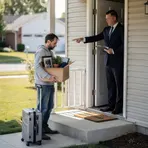
- Several weeks later, Jasper kicked Steve out and never spoke a word to him again.
- get kicked out
- kicked out of school
- kicked out of the house
They know she ain't going to kick us out because we got the baby.
- They know she ain't going to kick us out because we got the baby.
- She kicked me out of that nest with that phone call.
- It's it's like the country kicks you out, you get expelled.
- And when light hits the cell, it kicks that burglar out.
- And so maybe I kicked them out, kicked these lads out.
- She gets upset, kicks him out the house, never want to talk to him again.
- But Gandhi wasn't just this guy who kicks the British out of India.
- Like he was like, he kicked me out the house.
- Nora's mom finds them, fucking hates Patch, screams and kicks him out.
Examples
-
Look, I have no intention of kicking anyone out.
-
You kicked Zelda out of the hotel.
-
Yeah, and we always have an extra space that we will kick you out of after three to four weeks.
-
What I do is outside the box, I say I kick them out and force them to fight to get back in.
-
Never been kicked out of a bar before.
-
I'm kicking her out of the band.
-
Henry told me about the A-fib and you getting kicked out of the program.
-
Well, I got kicked out of my last school for having too many absences, so-
-
His bandmates soon recognized his lack of ability and kicked him out.
Academic text (2015) -
After the argument, the manager decided to kick out the disruptive customer from the restaurant.
Synonyms
 ∞
1.5
∞
1.5
To move something or someone away from a place
 852
3.8
852
3.8
To stop employing someone so they lose their job
 236
3.0
236
3.0
To force someone to leave a place, job, or group
 194
5.0
194
5.0
Force someone to leave a place, such as a school or country, often by official order
 90
5.5
90
5.5
To make someone stop working for a company
 80
6.2
80
6.2
To remove someone from power, often suddenly or by force
 77
4.6
77
4.6
To make someone leave a house or land by court order
 49
7.0
49
7.0
To force someone to leave a place like a bar or club
 46
4.4
46
4.4
To make someone leave a job by pressure or threats
 43
3.0
43
3.0
Make someone leave a job or group because of a problem
 36
2.8
36
2.8
To make someone or something leave a place
 32
4.2
32
4.2
Force someone to leave a place
 12
7.4
12
7.4
To stop someone from working at their job, usually because of bad work or behavior
 12
9.4
12
9.4
Suddenly stop seeing or talking to someone
 10
3.6
10
3.6
Remove people completely from a place or group because they are unwanted
 8
6.5
8
6.5
To make someone leave quickly to show they are not wanted
 7
7.4
7
7.4
Make someone leave a group or job in a public, shameful way
 7
8.6
7
8.6
Get rid of someone or something you no longer want
 3
5.1
3
5.1
To lead someone politely out of a room or building at the end of an event
 1
7.1
1
7.1
To force someone or something out of a place by searching


 1
5.0
1
5.0
To force someone to leave a place usually because they cause trouble

To stop employing someone, often suddenly as punishment
Antonyms

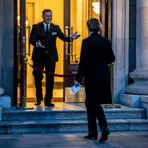
How Excluded
107
6.3
 194
5.0
80
6.2
512
3.0
70
3.3
∞
1.5
194
5.0
80
6.2
512
3.0
70
3.3
∞
1.5
- Informal
5
6.4
Surface Forms
Morphology
The meaning 'to force someone to leave' is directly and predictably built from 'kick' (to hit or force with the foot) combined with 'out' (away from the interior), evoking the clear image of pushing someone outside. This motion/expulsion composition follows a common English phrasal-verb pattern and is cross-linguistically transparent, so a B1 learner who knows both constituents would likely infer the meaning.
Etymology
The phrasal verb kick out comes from a simple picture: someone gets a kick and is sent out the door. That's why it means 'to force someone to leave'.